
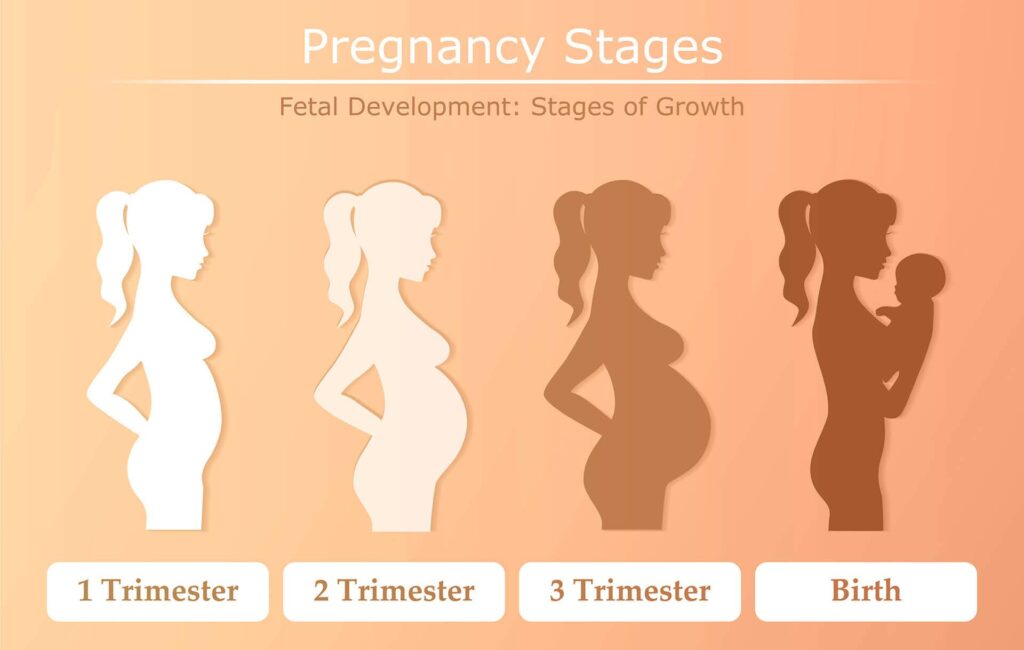
Pregnancy is more than a biological process; it is a metamorphosis. Over the course of roughly 40 weeks, a woman’s body performs the incredible feat of growing a new life, transforming her physically, emotionally, and spiritually.
A quick note: This article is for general information and isn’t medical advice. Every pregnancy is different. Talk to your doctor or midwife about your own situation, and get urgent medical help if something feels wrong. Read our disclaimer.
Last reviewed: November 2026. Checked against guidance from the NHS and the Government of India. See sources.
Whether you have just seen those two pink lines or you are counting down the days until your due date, understanding the roadmap of pregnancy is essential. It helps you prepare for the changes ahead and allows you to connect deeply with the life growing inside you.
In this guide, we will journey through the three distinct stages of pregnancy—the Trimesters—exploring what is happening to your baby, what is happening to you, and how to thrive during each phase.
🌿 The First Trimester: The Invisible Transformation
(Weeks 1 to 13)
The first trimester is a time of profound change, though much of it happens quietly. To the outside world, you may look the same, but inside, a complex biological symphony is playing.
Baby’s Development: From Spark to Fetus
ACOG counts the first trimester up to 13 weeks and 6 days, the second from 14 to 27 weeks and 6 days, and the third from 28 weeks (ACOG). This stage is critical. In just 13 weeks or so, your baby transforms from a single fertilized egg into a fully formed fetus.
- Implantation: The fertilized egg travels down the fallopian tube and implants into the uterine wall.
- The Vital Systems: The placenta begins to form, becoming the lifeline that delivers oxygen and nutrients.
- Organogenesis: By the end of this trimester, all major organs (heart, lungs, kidneys, and brain) and body systems are formed. Your baby even has tiny fingers and toes!
The Mother’s Experience: A Storm of Hormones
While the excitement is high, the physical toll can be heavy. Your body is working overtime to build the life-support system for your baby.
- Morning Sickness: Nausea and vomiting are very common and can happen at any time of day or night. It usually clears up by weeks 16 to 20 (NHS). Tell your doctor if you cannot keep fluids down.
- Extreme Fatigue: You may feel tired in your bones. This is your body directing energy toward fetal development.
- Tenderness: Hormonal surges often cause breast swelling and sensitivity.
💡 Pro Tip: Listen to your body. If you need to sleep at 7 PM, do it. Focus on staying hydrated and eating small, bland meals to manage nausea.
☀️ The Second Trimester: The Golden Period
(Weeks 14 to 27)
Welcome to the “honeymoon phase” of pregnancy! For many women, the fog of the first trimester lifts, revealing a burst of energy and a visible baby bump.
Baby’s Development: Rapid Growth
Your baby is growing fast—from the size of a peach to the size of a large cantaloupe.
- The Senses: Your baby can now hear your voice. Reading or singing to them helps form an early bond.
- Movement: Sometime between weeks 16 and 24, you should feel “quickening”—those first fluttery kicks. In a first pregnancy you might not feel movements until after 20 weeks; if you have not felt your baby move by 24 weeks, tell your doctor or midwife (NHS). This is often described as one of the most magical moments of pregnancy.
- Hair and Skin: Soft hair (lanugo) and a waxy coating (vernix) cover the baby to protect their skin in the amniotic fluid.
The Mother’s Experience: Glowing and Planning
As the nausea fades, you might find yourself feeling more like “yourself” again.
- The Glow: Increased blood volume often gives skin a radiant look.
- The Planning Phase: This is the ideal time to tackle logistics. Select your healthcare provider, tour the hospital, attend prenatal classes, and start your baby registry.
- Anatomy Scan: Usually between 18 and 21 weeks, you will be offered an ultrasound to check your baby’s growth and look for certain physical conditions (NHS). In India, finding out or telling the sex of the baby before birth is illegal under the PC & PNDT Act, 1994, so scan centres will not tell you (Government of India).
🌙 The Third Trimester: The Home Stretch
(Weeks 28 to 40)
You are in the final lap. This trimester is about maturation for the baby and preparation for the mother. It is a mix of physical discomfort and soaring anticipation.
Baby’s Development: Finishing Touches
Your baby is putting on weight rapidly to regulate their body temperature after birth.
- Lungs & Brain: The lungs are maturing to breathe air, and the brain is developing billions of neurons.
- Positioning: In the final weeks, the baby will likely turn head-down (engaging) to prepare for the journey into the world.
The Mother’s Experience: The Waiting Game
As your uterus expands to accommodate a full-term baby, things can get crowded.
- Physical Discomfort: Shortness of breath (as the baby pushes on your lungs), back pain, and frequent urination are common.
- Sleeplessness: Finding a comfortable position can be difficult. A pregnancy pillow is often a lifesaver here.
- Nesting Instinct: You may feel a sudden burst of energy to clean, organize, and prepare the nursery.
Preparing for Labor
As the due date looms, it is normal to feel a mix of anxiety and excitement.
- Practice Relaxation: utilize visualization and deep breathing techniques to manage stress.
- Pack Your Bag: Ensure your hospital bag is packed and your car seat is installed.
Not sure which week or trimester you are in? Our free pregnancy due date calculator works it out from the first day of your last period.
Pregnancy Trimesters at a Glance
| Trimester | Weeks | Key changes |
|---|---|---|
| First | Weeks 1–13 | Organs form; nausea and tiredness are common |
| Second | Weeks 14–27 | Baby movements begin; anatomy scan; energy often returns |
| Third | Weeks 28–40 | Rapid weight gain for baby; preparing for birth |
Conclusion: Trust the Journey
Pregnancy is a miraculous, transformative journey that spans 9 months of highs and lows. From the invisible work of the first trimester to the heavy anticipation of the third, every symptom and every kick is a sign of life and progress.
Be gentle with yourself. Your body is doing the most important work in the world. By nurturing yourself, you are nurturing the little one you are about to meet. You’ve got this, Mama.
Sources
We checked this article against these official and expert sources. Links were checked on 1 November 2026.
- NHS. Vomiting and morning sickness
- NHS. Your baby’s movements
- NHS. 20-week scan
- Press Information Bureau, Ministry of Health and Family Welfare. Ban on Sex Determination Test (PC & PNDT Act, 1994)
- ACOG. How Your Fetus Grows During Pregnancy
Last reviewed: November 2026. This article is for general information and isn’t medical advice. Always talk to your doctor about your own situation.
Leave a Reply