

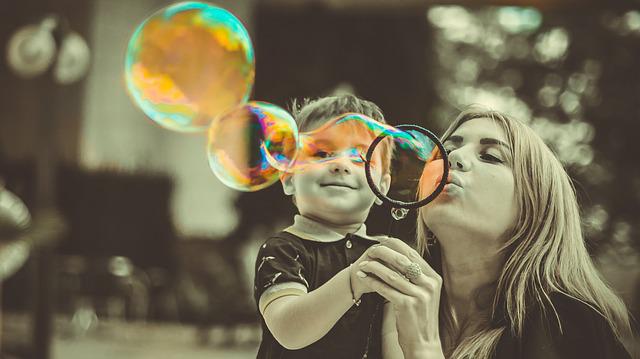
In a world increasingly focused on standardized testing, flashcards, and early academic achievement, “play” often gets a bad rap. It is frequently viewed as a break from learning—something children do after the real work is finished.
But research tells a very different story.
Play is not a break from learning; it is the engine of learning.
Play-based learning is an educational approach that recognizes that children make sense of their world through hands-on, self-directed engagement. Whether they are building a tower of blocks or pretending to be astronauts, they are doing complex cognitive and emotional work.
Here is a deep dive into why play is the most serious work your child will ever do, and how it shapes their future success.
🧠 The Neuroscience: How Play Builds the Brain
We often think of learning as sitting at a desk absorbing facts. However, for young children, learning is a full-body, sensory experience.
Firing Up Neural Connections
When a child engages in play, their brain lights up. Play stimulates the formation of synapses (connections between brain cells).
The Science: Play-based learning promotes neuroplasticity—the brain’s ability to reorganize itself and form new connections.
The Result: This lays the architectural foundation for higher-level cognitive skills, such as memory, attention, and language, which they will need for formal schooling later.
Skill Acquisition in Action
Play is the laboratory where children test theories.
Critical Thinking: When a child’s block tower falls over, they must analyze why (Gravity? Balance? Base too narrow?) and problem-solve a solution.
Creativity: In a world of defined answers, play allows for open-ended possibilities. A cardboard box can be a castle, a car, or a cave. This flexibility is the root of innovation.
❤️ EQ and Relationships: The Social Benefits
Academic smarts (IQ) are important, but Emotional Intelligence (EQ) is often the deciding factor in a happy life. Play is the primary way children develop these social “soft skills.”
Collaboration and Conflict Resolution
You cannot play “house” or “tag” alone. Play forces children to navigate complex social dynamics.
Negotiation: “I’ll be the doctor this time, and you can be the doctor next time.”
Empathy: Through pretend play (role-playing), children literally step into someone else’s shoes. This helps them understand different perspectives and feelings, a crucial component of empathy.
Building Resilience
In play, the stakes are low, which makes it a safe place to fail.
If they lose a board game or their sandcastle washes away, they experience frustration in a manageable dose.
Overcoming these small setbacks builds resilience and self-confidence, teaching them that failure is just part of the process.
🚀 The Motivation Factor: Why Fun Matters
One of the core principles of play-based learning is that it is joyful.
Intrinsic Motivation
When a child is forced to memorize a worksheet, they are driven by extrinsic motivation (pleasing the teacher/parent). When they are playing, they are driven by intrinsic motivation (pure curiosity and enjoyment).
The Retention Rate: Research shows that the brain retains information better when the learner is engaged and emotionally positive.
Lifelong Learners: By associating learning with fun rather than drudgery, we foster a natural curiosity that lasts a lifetime.
🛠️ What Does Play-Based Learning Look Like?
It isn’t just chaos. It is often subtle and can be categorized into different types:
Constructive Play: Building with Legos, blocks, or sand. (Teaches math, physics, symmetry).
Dramatic Play: Dress-up, kitchen sets, dolls. (Teaches storytelling, vocabulary, empathy).
Physical Play: Climbing, running, ball games. (Teaches gross motor skills, risk assessment).
Creative Play: Painting, molding clay, drawing. (Teaches fine motor skills, self-expression).
Conclusion: Prioritizing the Playroom
It is time to change the narrative. Play is not “just” play. It is how children learn to problem-solve, how they learn to be friends, and how they build the brains that will one day navigate the adult world.
By prioritizing play-based learning—at home and in our schools—we aren’t just letting kids have fun. We are building a stronger, more resilient, and more creative generation.
So, go ahead. Pour out the Legos, open the dress-up box, and let them play. They are working harder than you think.
Leave a Reply