

Learning Worksheets Phonics th digraph
Free printable PDF · digraphs · ages 5–7
Th Digraph Worksheet: The th Sound (Free Printable PDF)
Thumb, three, bath and tooth: t and h together make the /th/ sound, the one where your tongue peeks out between your teeth.
Free for home and classroom use · A4 · 3 pages · PDF, 178 KB
What’s in the PDF
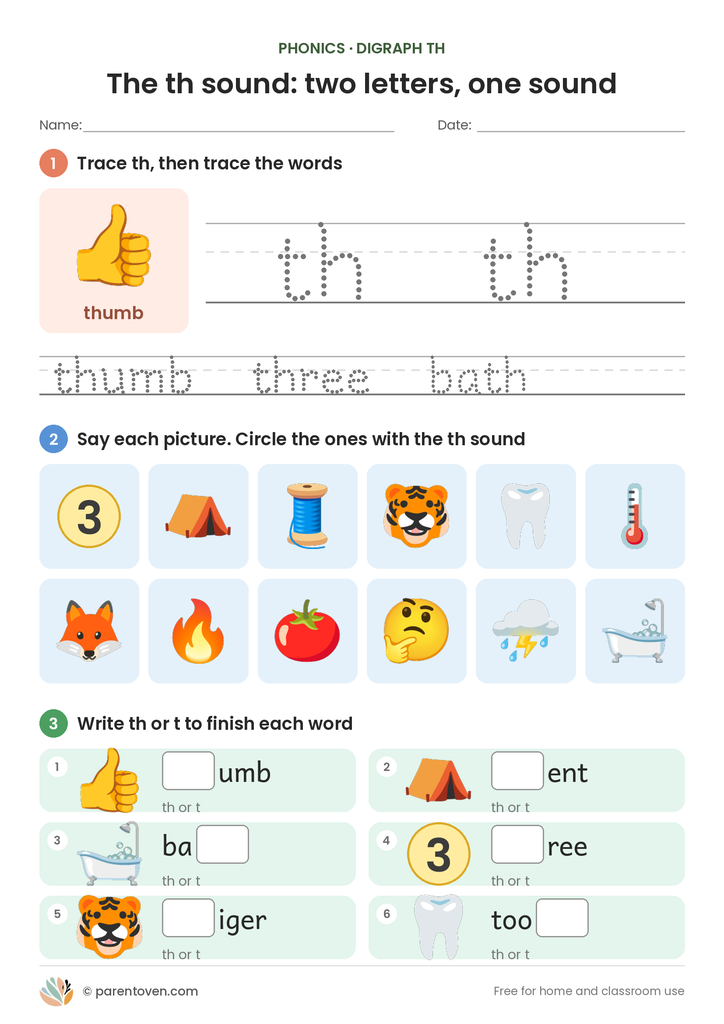
- Page 1: trace th and the words thumb, three and bath; circle the pictures with the th sound; then write th or t to finish six picture words.
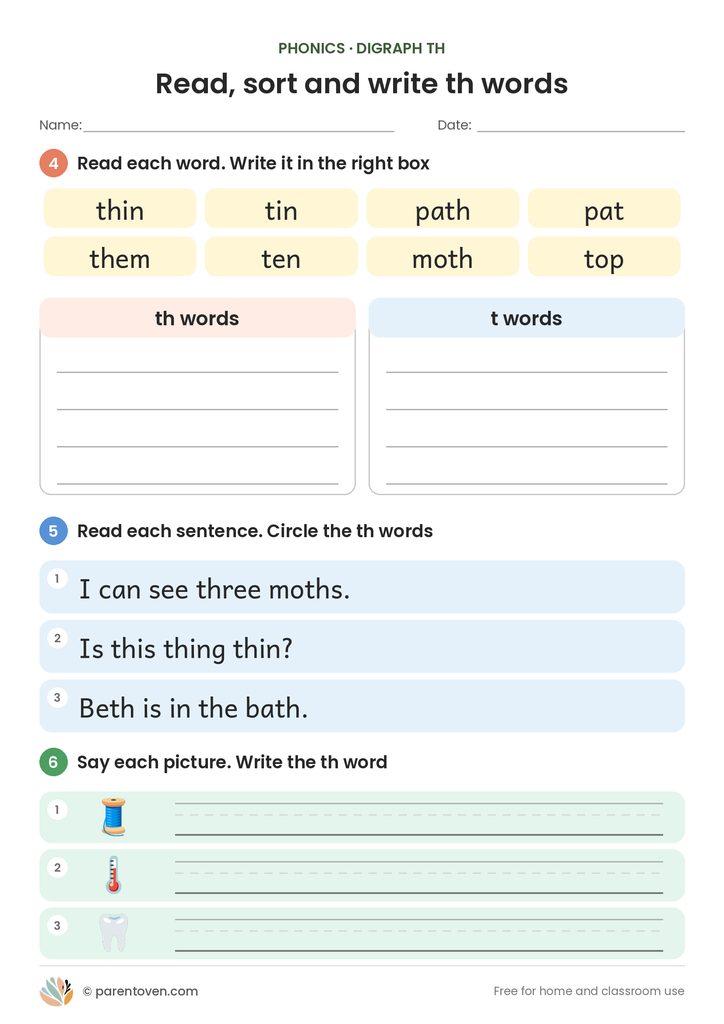
- Page 2: sort eight words into th and t boxes; read three sentences and circle the th words; then write a th word for three pictures.
- Page 3: an answer key with every picture name.
Read the instructions aloud for children who are still learning to read. Say each picture name together first.
What is the th digraph?
The th digraph makes two closely related sounds. In thin, thumb and three it is a soft, airy sound with no voice. In this, that and them it buzzes, because your voice is on. Both are spelled th, and children usually do not need to know the names for them.
How to say the th sound
Put the tip of your tongue gently between your teeth and blow: /th/, as in thumb. Then keep it there and turn your voice on: /th/, as in this. It is fine, and quite fun, to see your tongue stick out.
Examples
- Airy th: thin, thick, thumb, three, bath, moth
- Buzzy th: this, that, then, them, with, the
- In sentences: This is my thumb. Three moths flew by.
How to teach it
Look in a mirror together and stick your tongues out a tiny bit. Blow for thumb, buzz for this. Point to your thumb each time you say a th word. Then do the t or th activity, which helps children hear the difference between tin and thin or ten and then. Finish with the sentences: words like this and the will appear in almost every book your child reads.
Common mix-ups
Many young children say /f/ or /v/ for th (“free” for three, “bruvver” for brother), or /d/ (“dis” for this). This is a common speech stage. For reading, the important thing is recognising that t and h together are one sound.
Game: Thumbs up for th
Say a list of words. Your child gives a thumbs up when they hear /th/ and a thumbs down when they do not. Mix in tricky pairs like tin and thin, fin and thin, so they really listen.
Questions to ask
- Is your tongue showing when you say that word?
- Is it the airy th or the buzzy th?
- Can you find the th in “the”?
Practise next
Try sh digraph, ch digraph, wh digraph. Compare it with the letter t sound. Reading CVC words confidently first? See our CVC word worksheets.
Th digraph questions
Why does th sound different in thin and this?
There are two th sounds: an airy one (thin) and a buzzy one (this). They use the same mouth shape, and the spelling is the same, so children learn them together.
My child says f for th. Should I worry?
It is very common and often lasts until age 6 or 7. If you are concerned, talk to a speech and language professional.
More answers in the phonics FAQ.
More Free Phonics Worksheets
Also try: CVC words · sight words · grade 1 worksheets