
Learning Worksheets Phonics
Free printable PDFs · ages 3–7
Phonics Worksheets: Free Letter Sounds, Digraphs and Blends
34 free phonics worksheets: a beginning sounds page for every letter from a to z, the digraphs sh, ch, th, wh and ck, and l, r and s blends. Every PDF has an answer key with picture names.
Free PDFs · A4 or US Letter · No sign-up
Step 1 · ages 3–5
Beginning sounds a to z
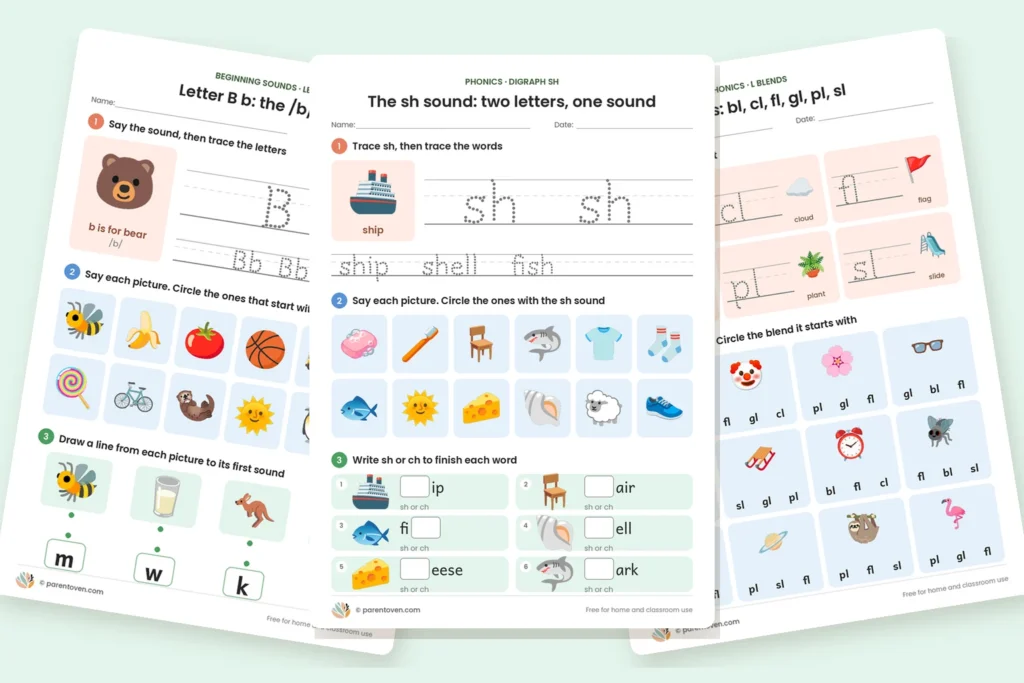
Children trace the letter, circle the pictures that start with its sound and match pictures to first sounds. Tap a letter to open its worksheet.
Vowels a, e, i, o and u use their short sounds, as in apple, egg, insect, octopus and umbrella. The x page listens for /ks/ at the end of words like box.
Step 2 · ages 5–7
Digraphs: two letters, one sound
Once children can read CVC words like cat and sun, they are ready for sh, ch, th, wh and ck.
sh digraph
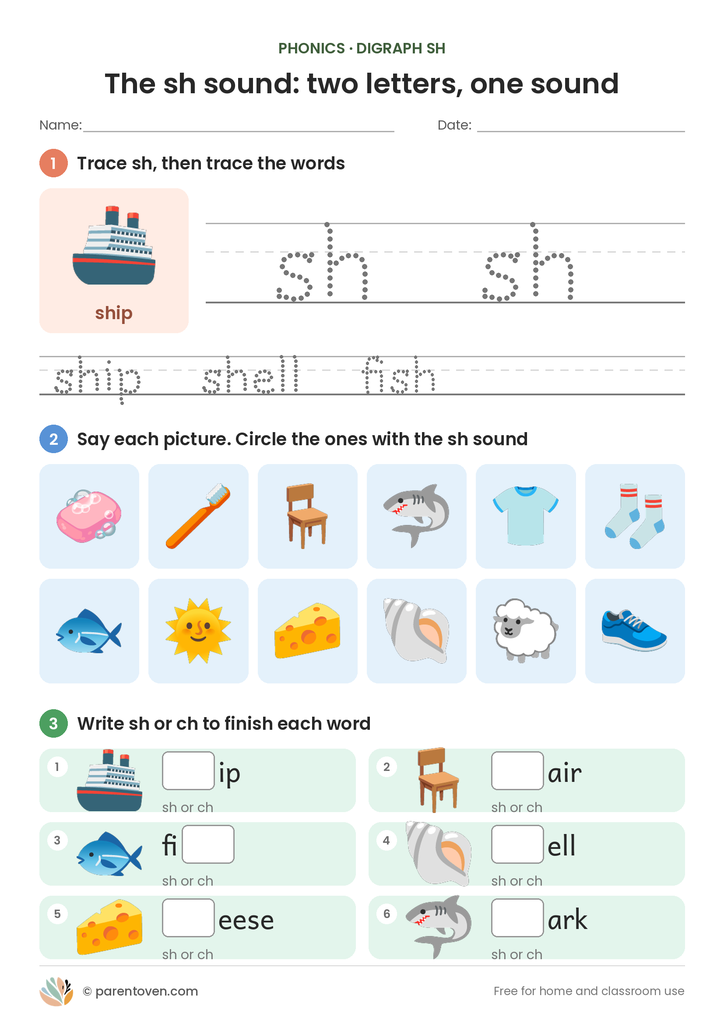
s and h join together to make one new sound, /sh/, the sound you make when you ask someone to be quiet.
Ages 5–7 · 2 pages + answers
ch digraph
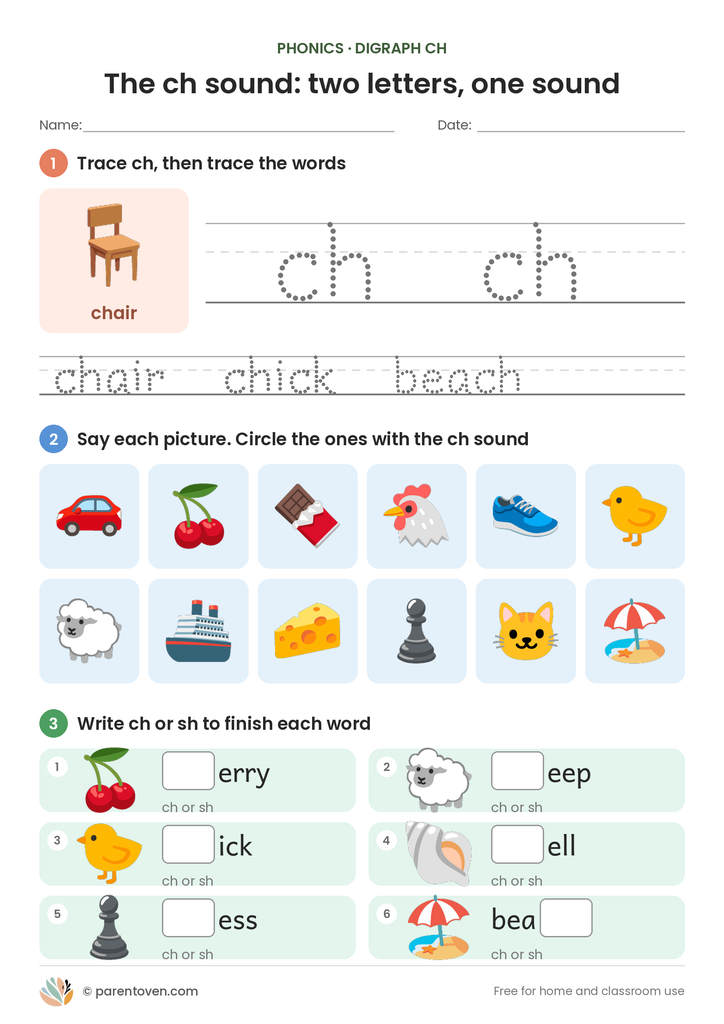
c and h together make the /ch/ sound, a short, sneezy sound like a train going choo-choo.
Ages 5–7 · 2 pages + answers
th digraph
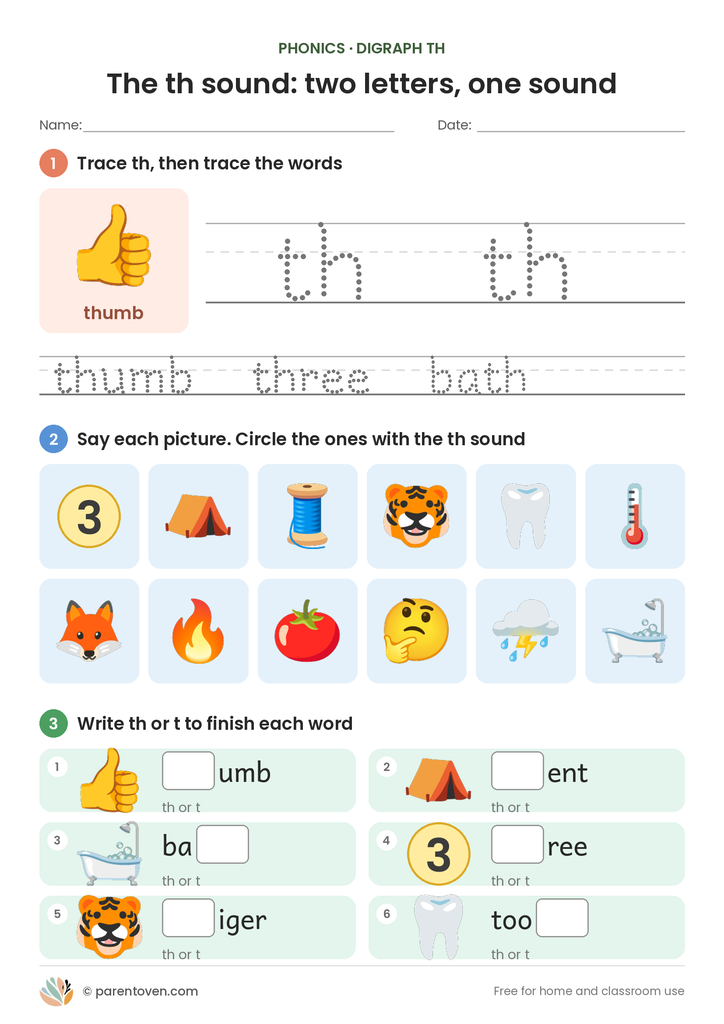
t and h together make the /th/ sound, the one where your tongue peeks out between your teeth.
Ages 5–7 · 2 pages + answers
wh digraph
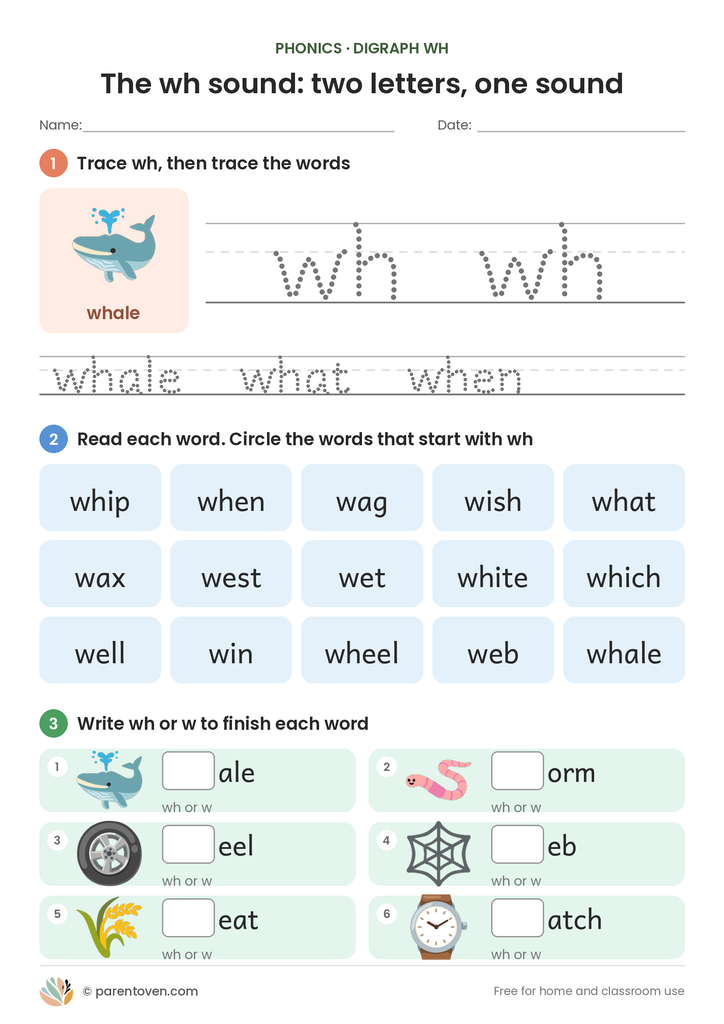
w and h together make the wh spelling, found at the start of many question words.
Ages 5–7 · 2 pages + answers
ck digraph
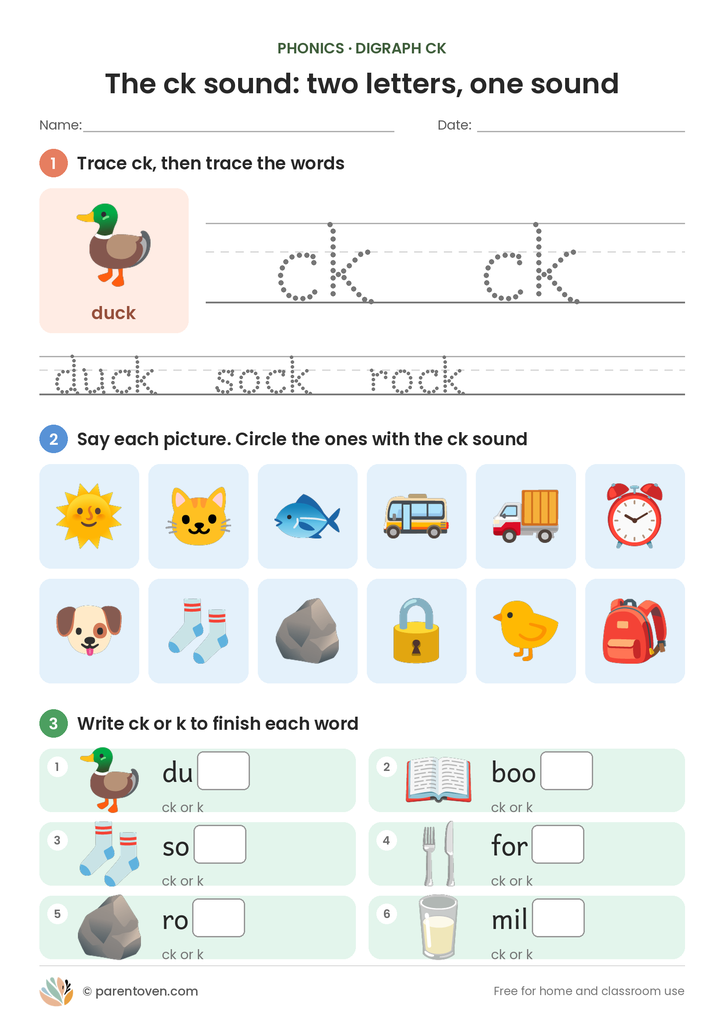
c and k together make one /k/ sound, and they nearly always come at the end of a word, straight after a short vowel.
Ages 5–7 · 2 pages + answers
Step 3 · ages 6–7
Blends: two sounds, said quickly
Blends turn short words into longer ones: lap becomes clap, tap becomes trap and top becomes stop.
L blends: bl, cl, fl, gl, pl, sl
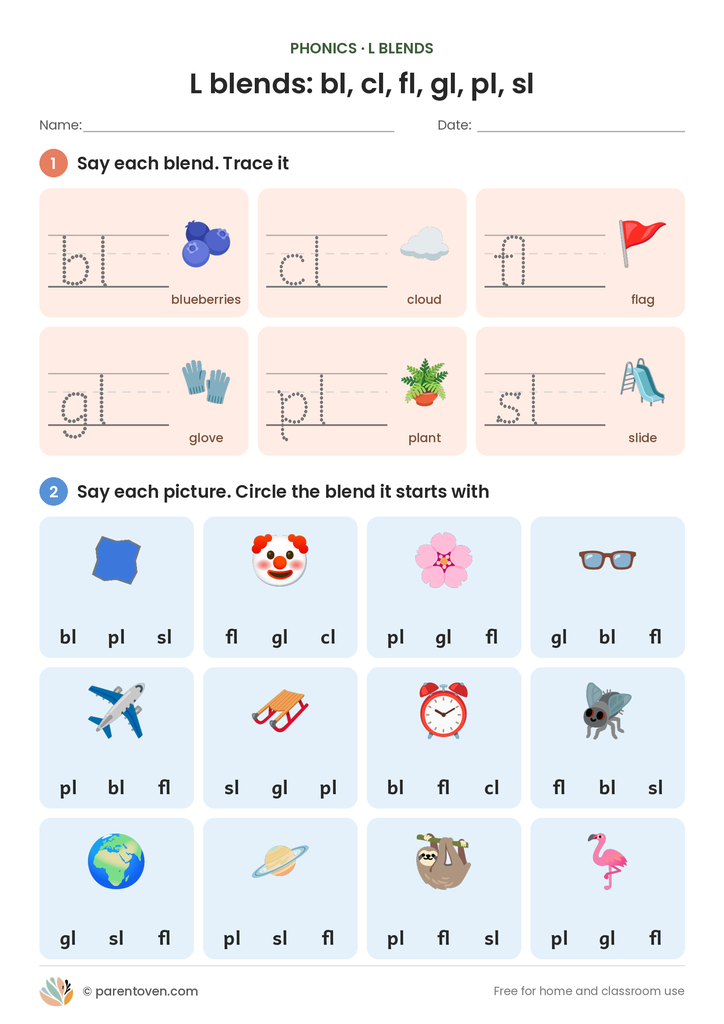
The l-blends are bl, cl, fl, gl, pl and sl, as in blue, clap and flag.
Ages 6–7 · 2 pages + answers
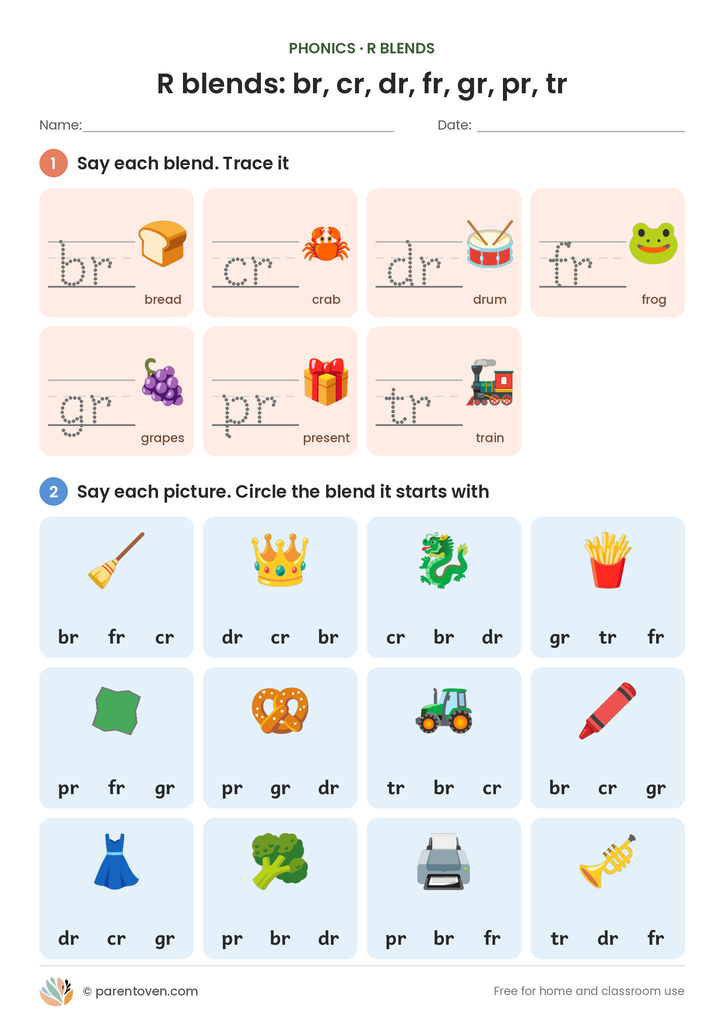
R blends: br, cr, dr, fr, gr, pr, tr
The r-blends are br, cr, dr, fr, gr, pr and tr.
Ages 6–7 · 2 pages + answers
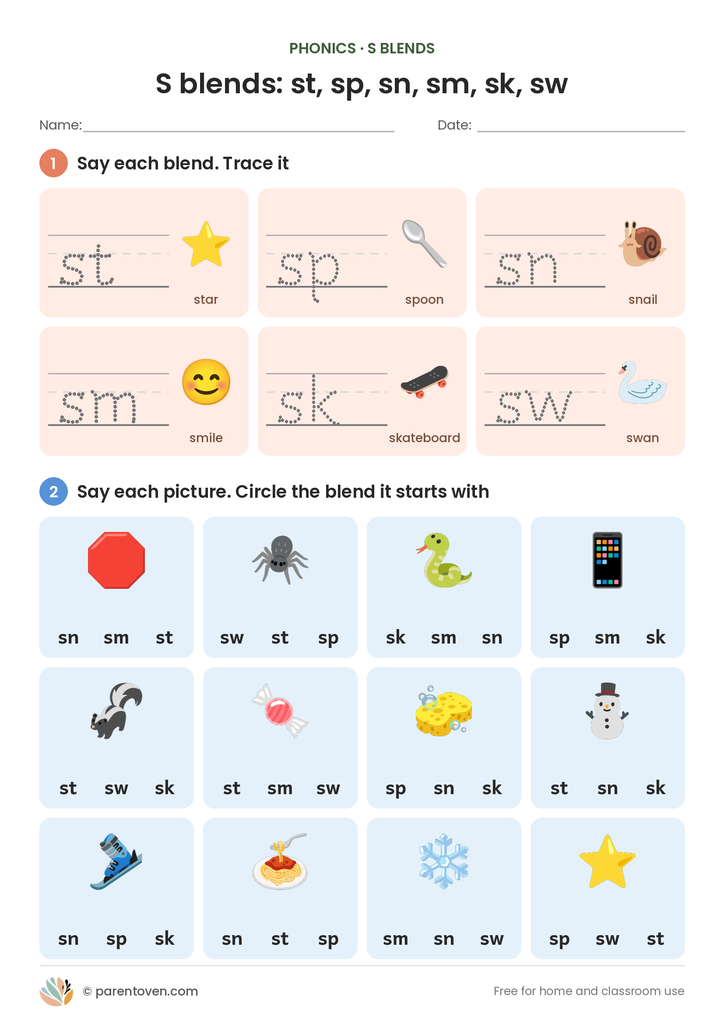
S blends: st, sp, sn, sm, sk, sw
The s-blends on this page are st, sp, sn, sm, sk and sw.
Ages 6–7 · 2 pages + answers
How to Teach Phonics at Home in 5 Steps
- Listen first: play “I spy” with sounds, not letter names (“I spy something that starts with /m/”).
- Learn the letter sounds: one or two letters a week, using the beginning sounds pages.
- Blend sounds into words: c-a-t, cat. Our CVC word worksheets are made for this step.
- Add digraphs: sh, ch, th, wh and ck, where two letters make one sound.
- Add blends: l, r and s blends make longer words like flag, frog and stop.
Keep sessions short and playful: five to ten minutes is plenty. Mix in sight words, which are learned by memory rather than sounded out.
Which phonics worksheets for which age?
- Ages 3 to 4: beginning sounds, starting with the letters in your child’s name and easy sounds like m, s and b. See the preschool worksheets page for more.
- Ages 4 to 6: all 26 letter sounds, then CVC words and the first digraphs sh and ch. See the kindergarten worksheets page.
- Ages 6 to 7: th, wh, ck, then l-blends, r-blends and s-blends. See the grade 1 worksheets page.
Phonics and sight words go together
Phonics lets children sound out regular words, while sight word worksheets cover the common words that do not follow the rules, like the, said and was. Practising both builds fluent, confident readers.
Letter sounds and handwriting
Each letter sound page links to its uppercase tracing, lowercase tracing and cursive pages, so children can say the sound while they practise forming the letter.
Frequently Asked Questions
What is phonics?
Phonics teaches children how letters and groups of letters link to the sounds of spoken words. Knowing that b says /b/ and sh says /sh/ lets children sound out, or decode, new words for themselves.
What order should phonics be taught in?
Most programmes start with single letter sounds, then blend them into CVC words like cat and sun. Digraphs such as sh, ch and th come next, then blends like fl, tr and st. Sight words are learned alongside.
What age should children start phonics?
Many children enjoy listening for beginning sounds at 3 or 4. Formal phonics usually starts at 4 to 5, with digraphs and blends at 5 to 7. Follow your child’s interest rather than an exact age.
What is the difference between a digraph and a blend?
In a digraph, two letters make one new sound: s and h make /sh/. In a blend, you still hear both sounds, quickly joined: f and l in flag.
Do the worksheets have answers?
Yes. Every PDF ends with an answer key that also lists the name of each picture, so you know which word to say.
Can I use these worksheets in my classroom?
Yes. Every worksheet is free for home and classroom use. Please share the page link rather than re-uploading the PDF.
Can you make a worksheet on another topic?
We would love to hear your idea. Email us at parentoven@gmail.com.
More Free Reading Worksheets
Also try: grammar for kids · alphabet tracing · all free worksheets