
Learning Worksheets Preschool
Free printable PDFs · ages 3–4
Preschool Worksheets (Ages 3–4): Free Printable PDFs
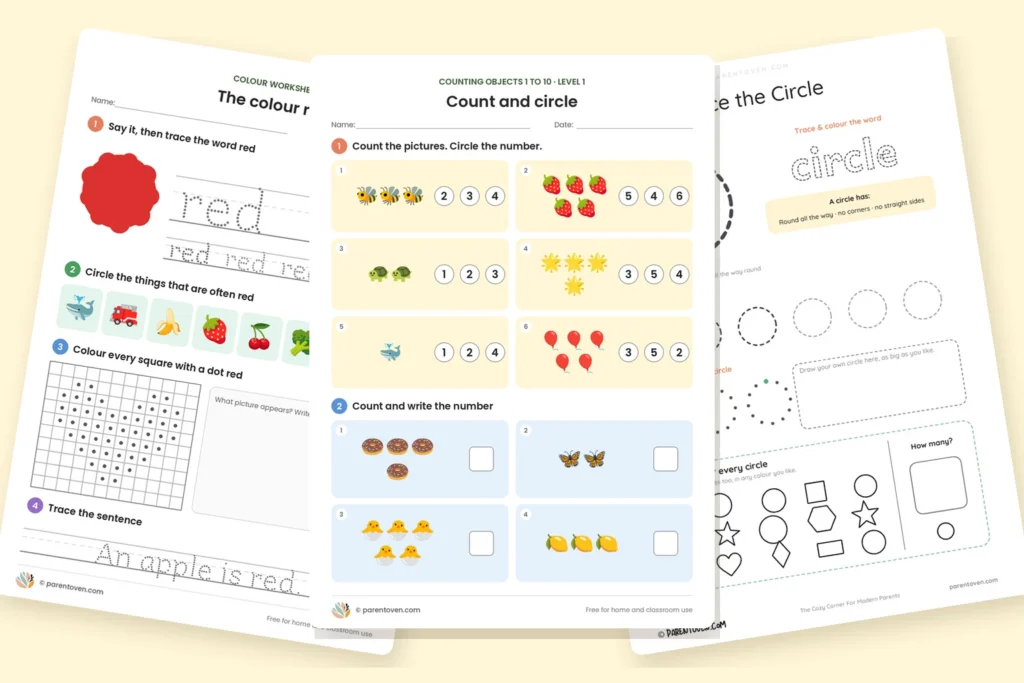
Free preschool worksheets for 3 and 4 year olds, picked from every section of the site: letter and number tracing, shapes, colours, counting, patterns and first word games.
Preschool is also called pre-K or nursery in some countries (LKG in some schools).
What children usually learn at ages 3 to 4
- Holding a crayon and making lines, circles and simple shapes
- Recognising some letters, especially the ones in their own name
- Counting up to five or ten objects, one at a time
- Naming the main colours and shapes
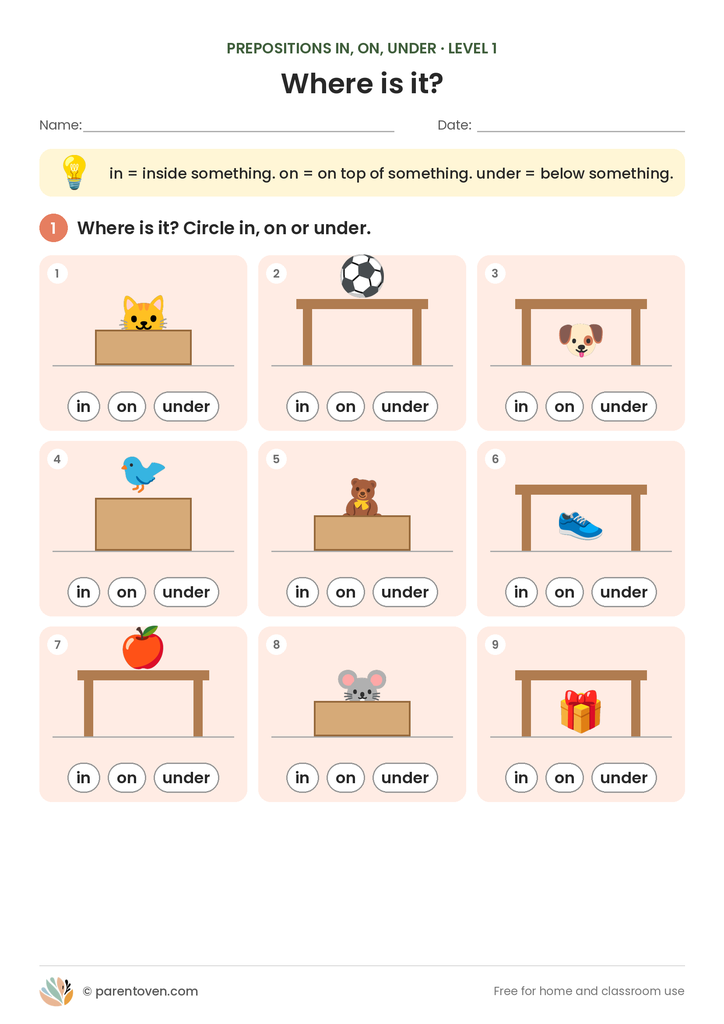
- Listening for rhymes and following simple position words like in, on and under
Every child grows at their own pace. These are typical skills, not a checklist, and play matters far more than paper at this age.
Worksheets by subject
The best worksheets for preschool
Start with one short page a day. Choose a different subject each day so it always feels new.
Letters and pencil control
Big, bold capitals are easiest for little hands. Use crayons or chunky pencils.
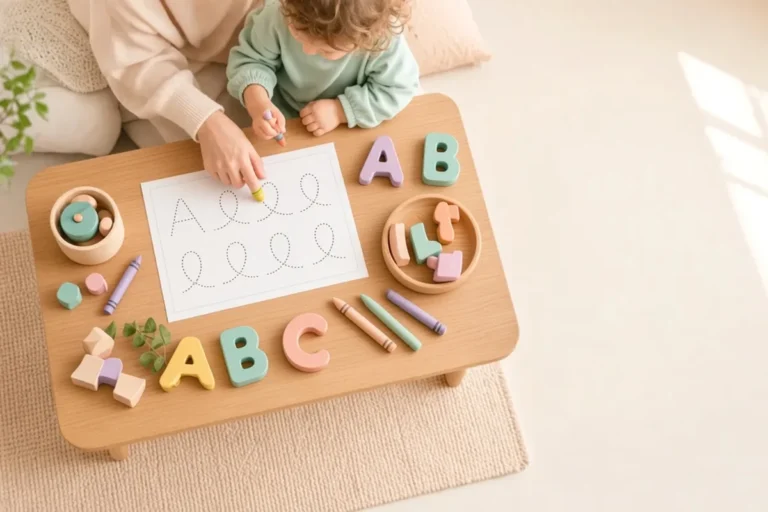
Alphabet tracing A to Z
Trace capital letters with a picture for each one. Start with the letters in your child’s name.
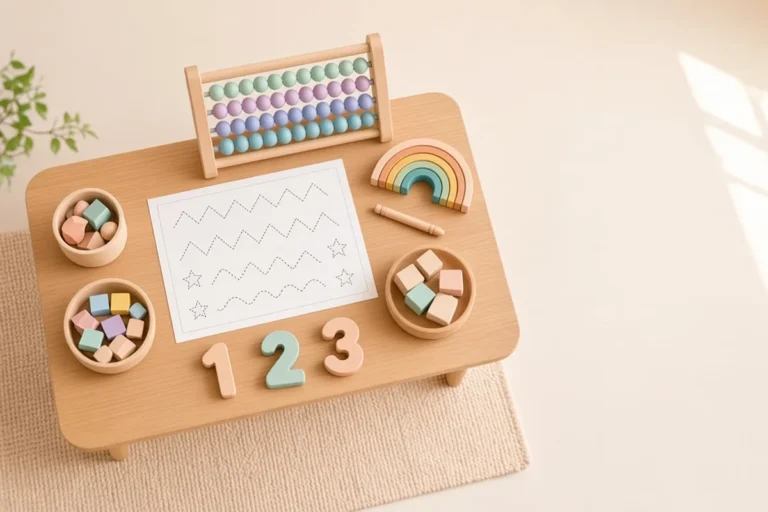
Number tracing 1 to 10
Big dashed numbers with arrows and pictures to count. Perfect for first number writing.
Numbers and early maths
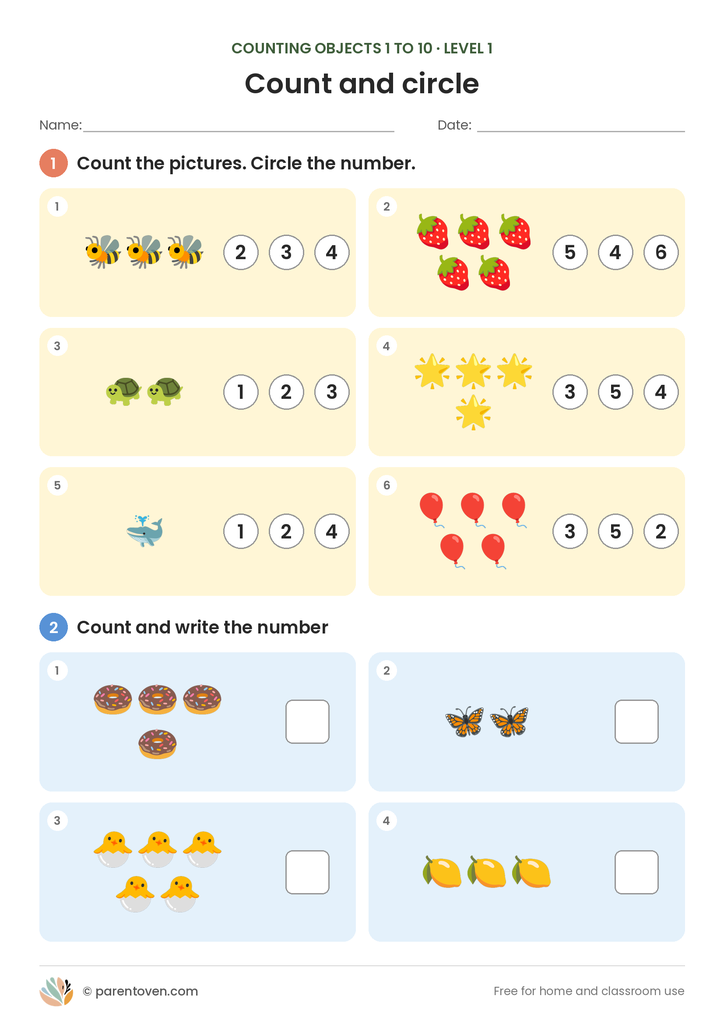
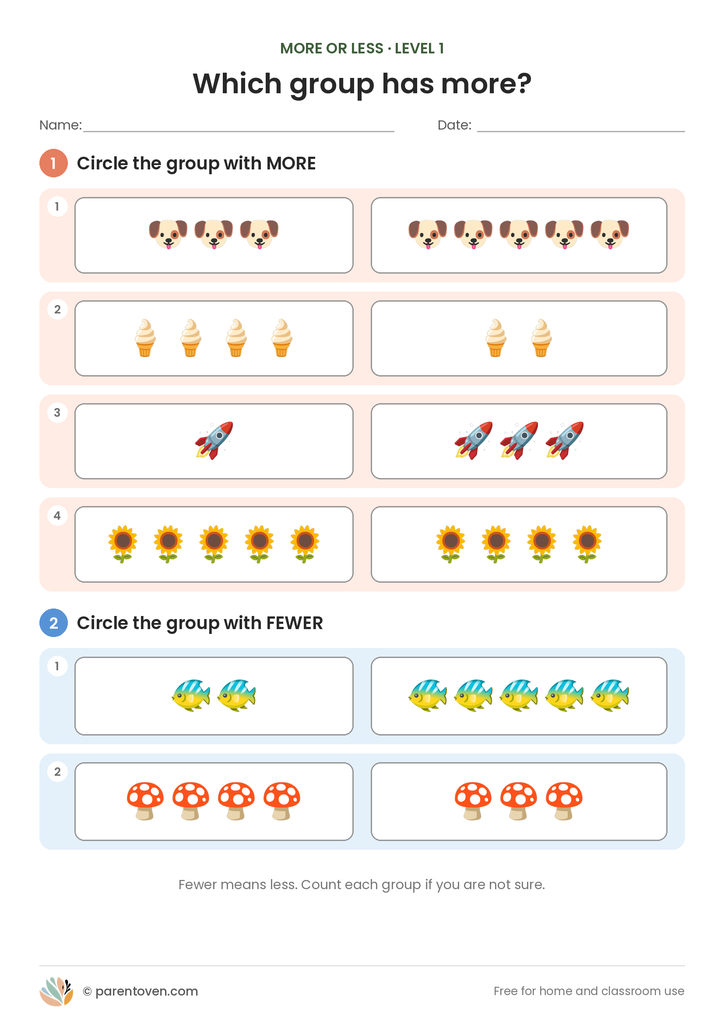
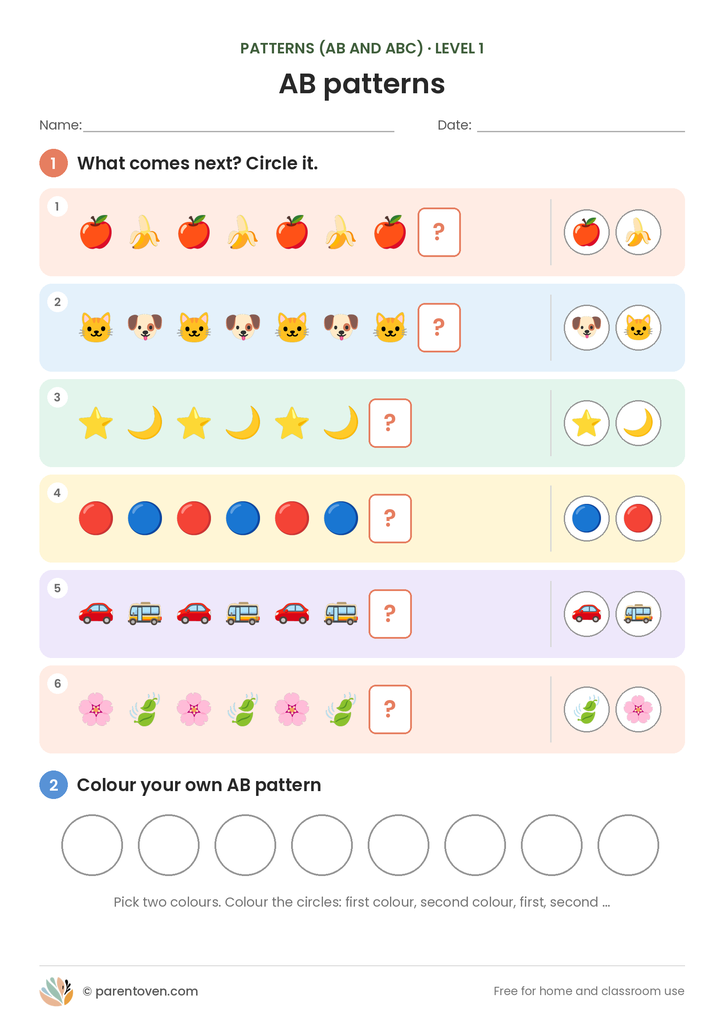
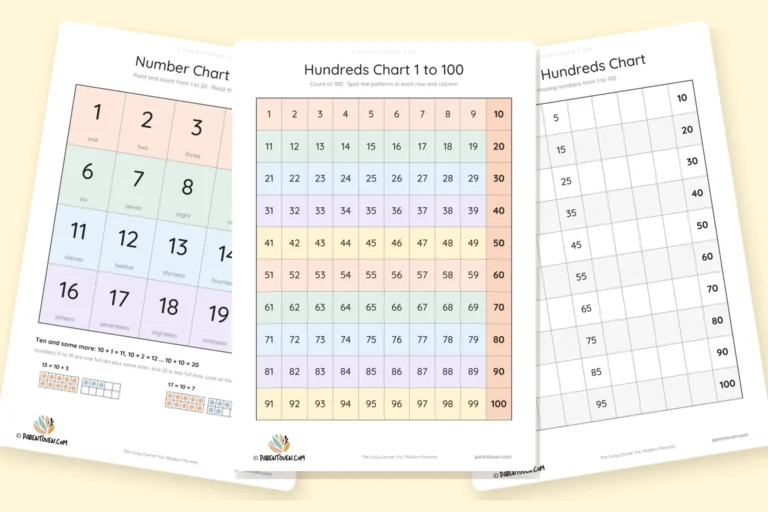
Lots of counting with real objects first, then these pages to practise.
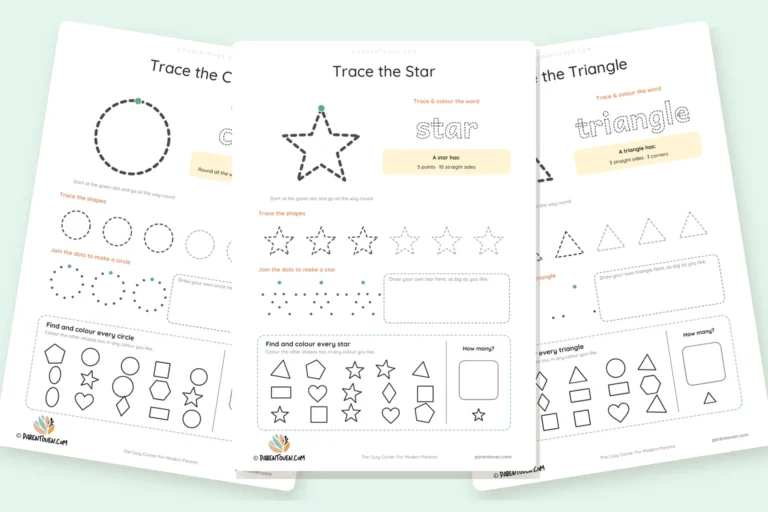
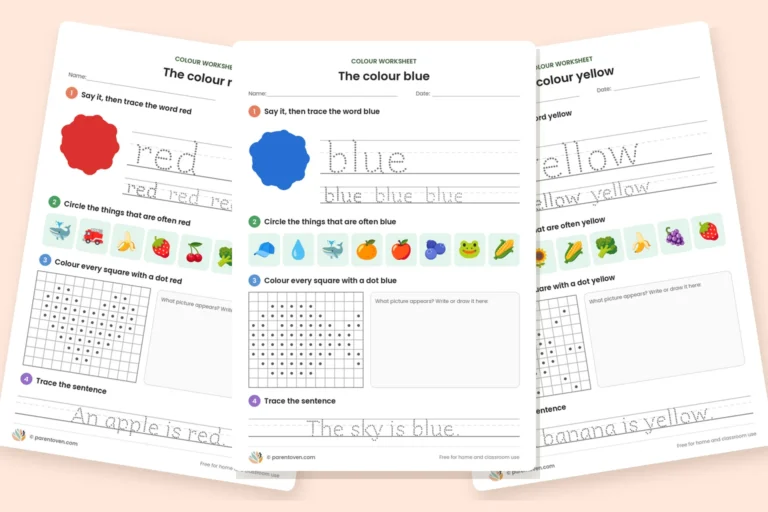
Shapes and colours
Name, trace and find shapes and colours, then hunt for them around the house.
Words and listening
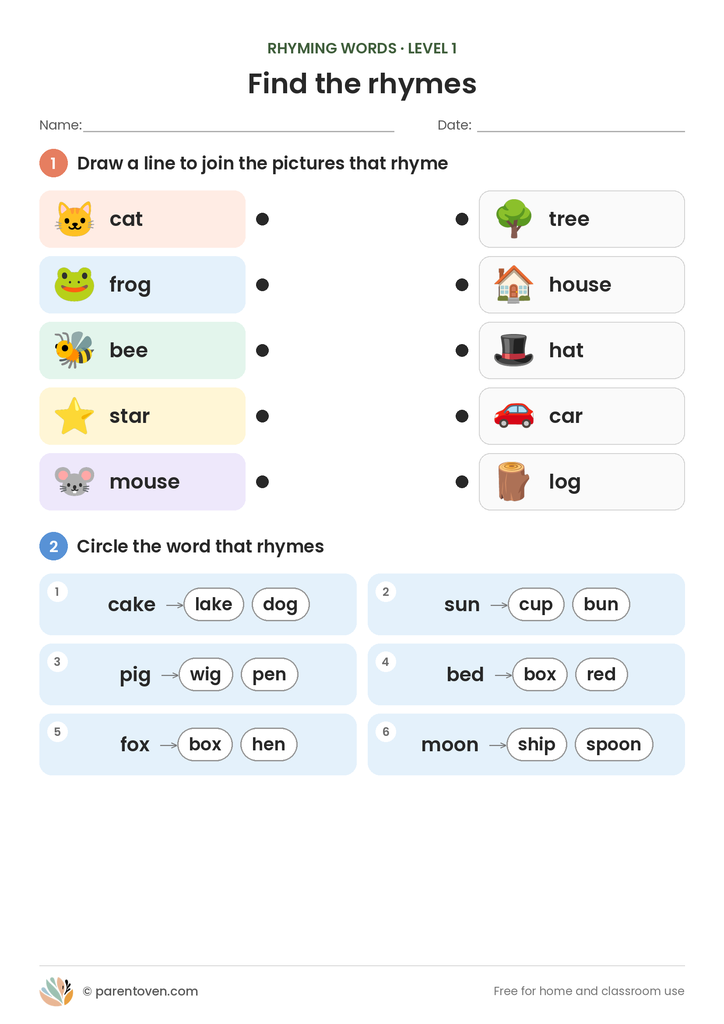
Early grammar for preschoolers is mostly about listening and talking.
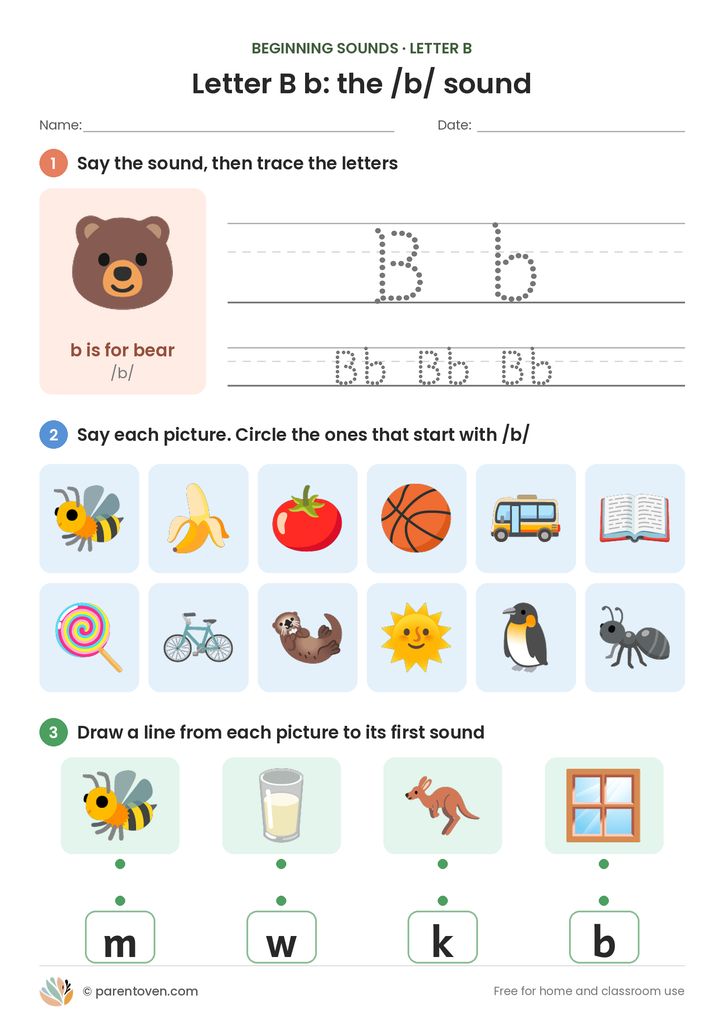
Letter sounds a to z
Circle the pictures that start with each sound. Begin with the letters in your child’s name.
A simple week of practice
Ten minutes a day is plenty. Here is one easy way to spread the pages across a week:
- Monday: trace one letter from the alphabet set.
- Tuesday: count and circle on the counting page.
- Wednesday: one shape or one colour page, then a hunt around the house.
- Thursday: one number tracing page.
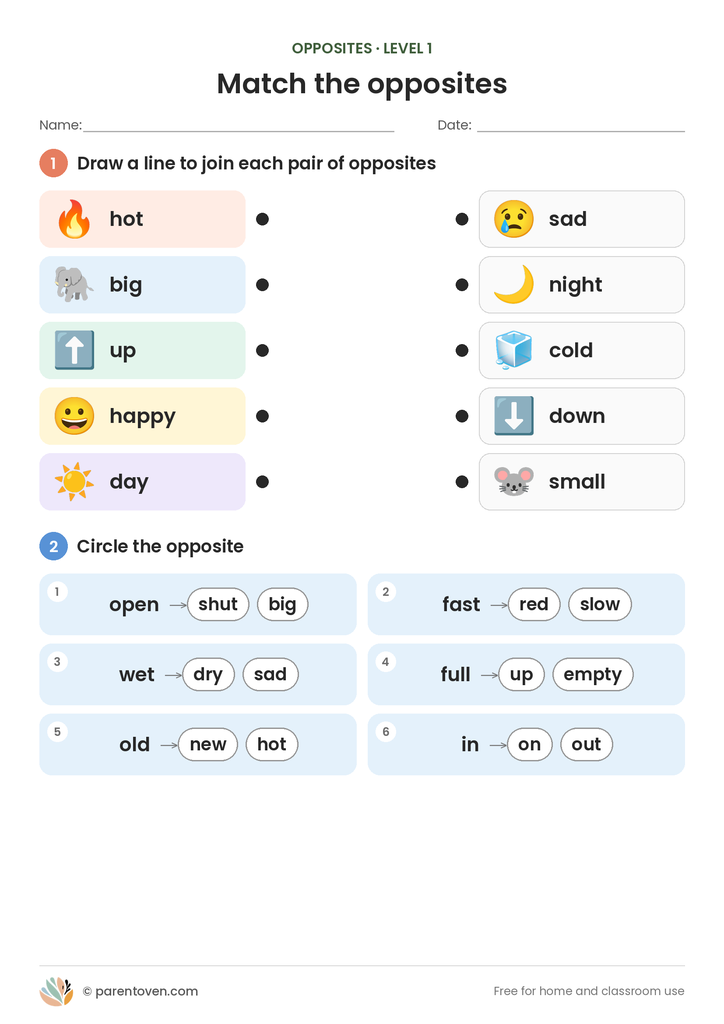
- Friday: a word game: rhymes, opposites or in, on and under.
Tips for preschoolers
- Stop while it is still fun, even if the page is not finished.
- Let your child colour, scribble and talk about the pictures. It all counts.
- Use stickers or stamps instead of writing answers if pencils are hard work.
- Say the words and numbers out loud as you go.
Ready for kindergarten worksheets?
When your child can count ten objects, trace most capital letters and enjoys sitting for a page, try our kindergarten worksheets.
Frequently Asked Questions
What should a 3 year old learn?
Most 3 year olds are learning to hold a crayon, count a few objects, name some colours and shapes, and enjoy songs and rhymes. Play, talk and stories matter most at this age.
Are worksheets good for preschoolers?
Short, playful worksheets can help with pencil control and early skills, as long as they are fun. Keep sessions to five or ten minutes and mix them with hands-on play.
What should a 4 year old know before kindergarten?
It helps if children can recognise some letters, count to ten, name the main colours and shapes, and hold a pencil. Every child is different, so do not worry if some skills come later.
Which preschool worksheet should we start with?
Start with shapes or colours, which feel like colouring. Then add letter tracing and counting.
Are these worksheets free?
Yes. Every worksheet is free for home and classroom use, with no sign-up. Please share the page link rather than re-uploading the PDF.
Can you make a worksheet on another topic?
We would love to hear your idea. Email us at parentoven@gmail.com.
Worksheets for Every Age
Also try: grade 2 worksheets · maths worksheets · grammar for kids · tracing worksheets