

Learning Worksheets Maths
Free printable PDFs · ages 3–8
Maths Worksheets for Kids: 15 Free Printable PDFs
Fifteen free maths (math) worksheets for ages 3 to 8: counting, comparing, patterns, adding and taking away to 20, skip counting, place value, telling time and money. Every PDF has two levels and an answer key.
Free PDFs · A4 or US Letter · No sign-up
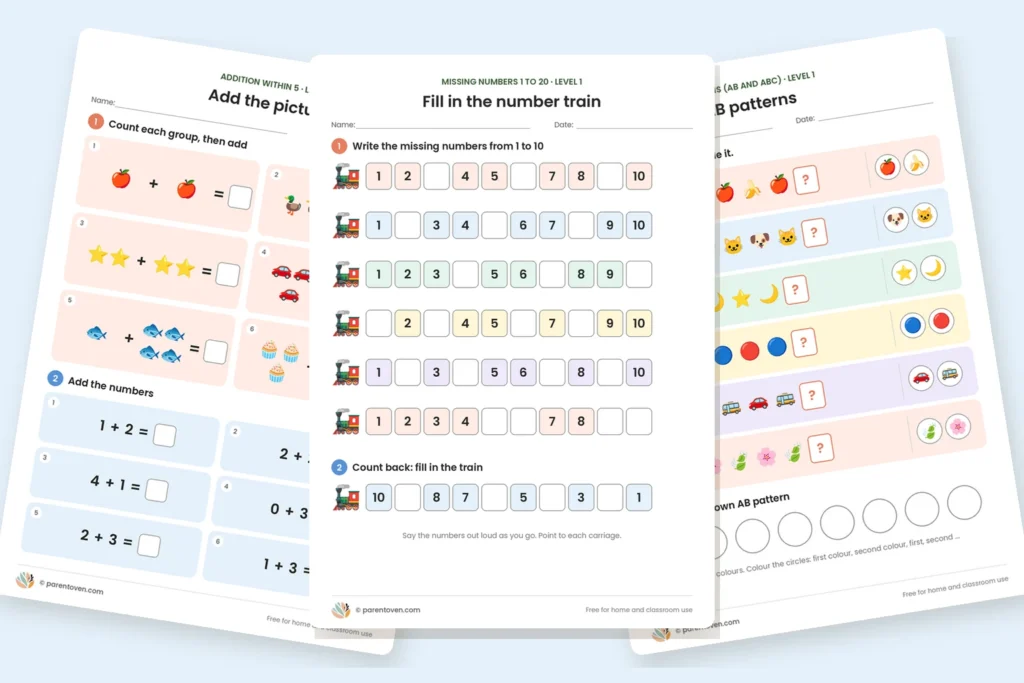
Pick a topic
All 15 maths worksheets
Each topic page has the PDF, teaching tips, a game and everyday ideas.
Counting and comparing
Start here. These build number sense before any sums.
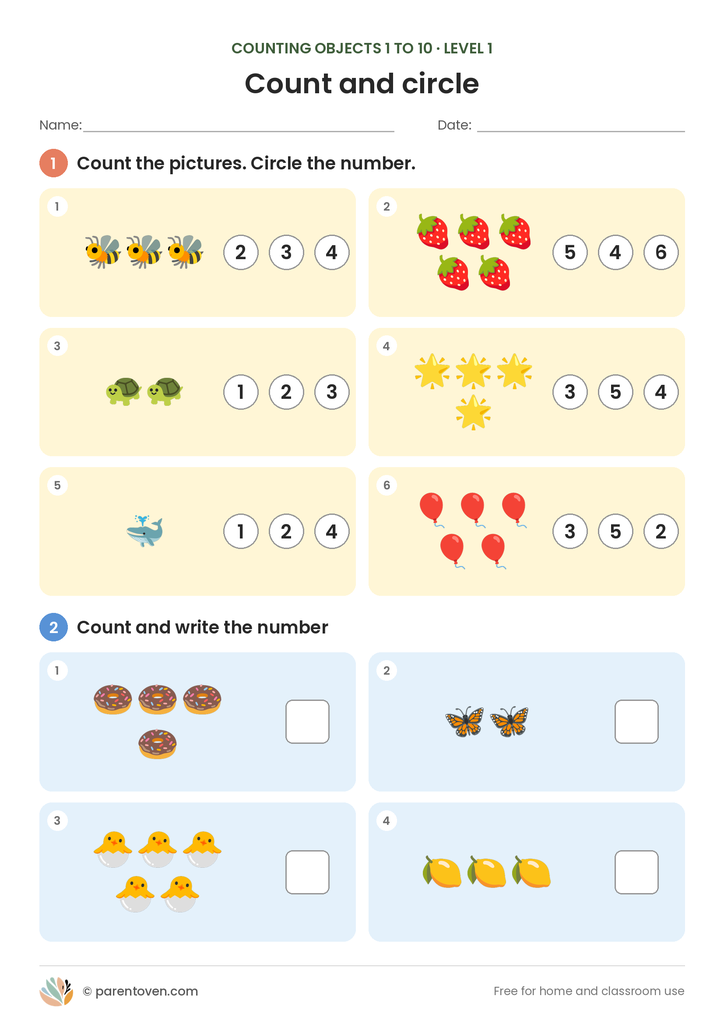
Counting Objects 1 to 10
Count objects to 10: Count real pictures and match them to numbers.
Ages 3–5 · 2 levels + answers
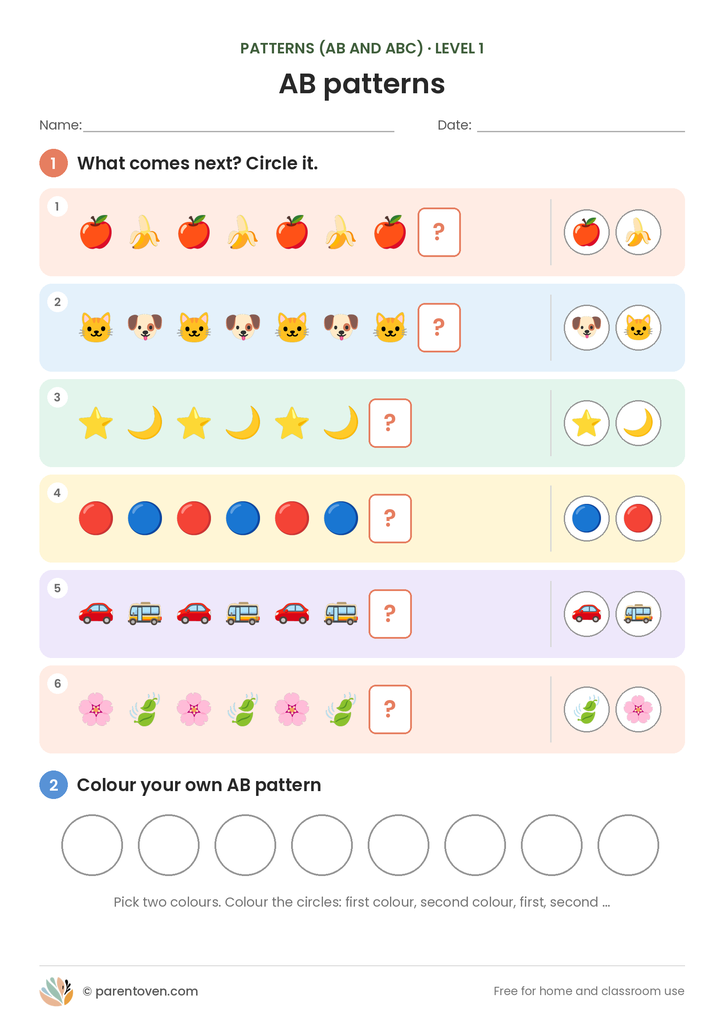
Patterns (AB and ABC)
Patterns: Spot what comes next in picture patterns.
Ages 3–6 · 2 levels + answers
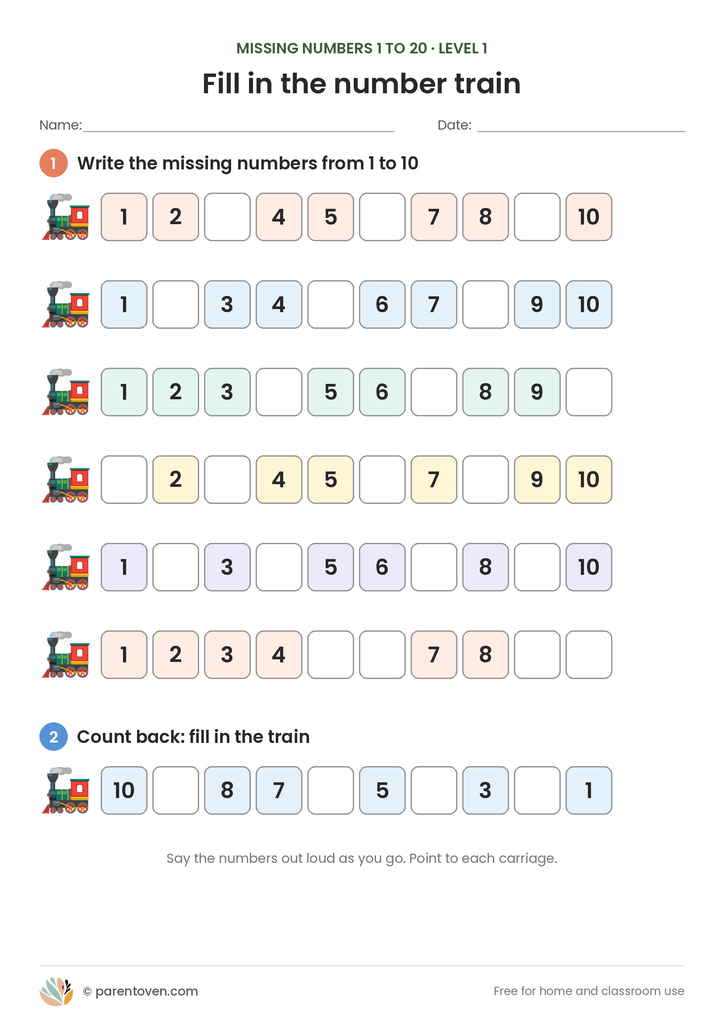
Missing Numbers 1 to 20
Missing numbers to 20: Number trains with gaps to fill.
Ages 4–6 · 2 levels + answers
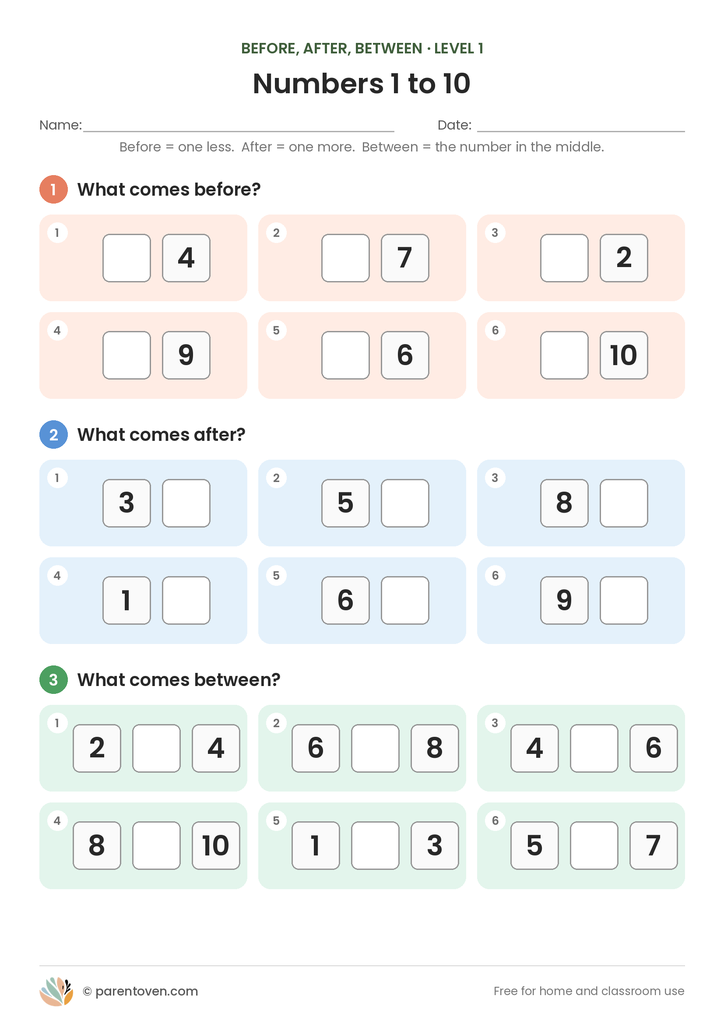
Before, After and Between Numbers
Before, after, between: Learn which number comes before, after or between.
Ages 5–6 · 2 levels + answers
Adding and taking away
Move on once your child can count ten objects reliably.
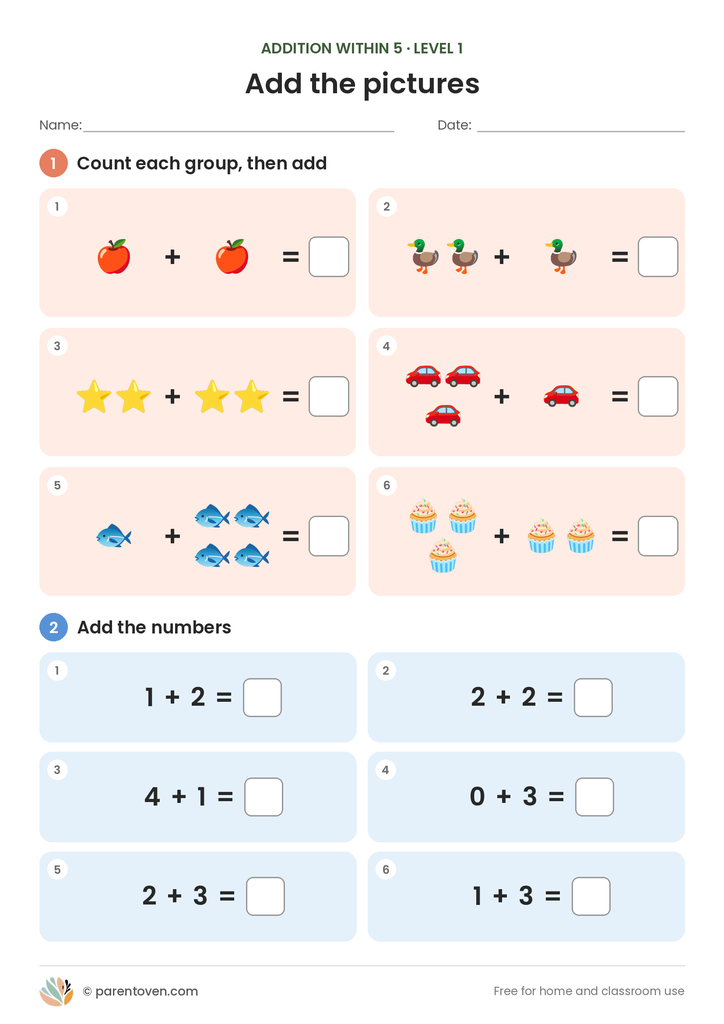
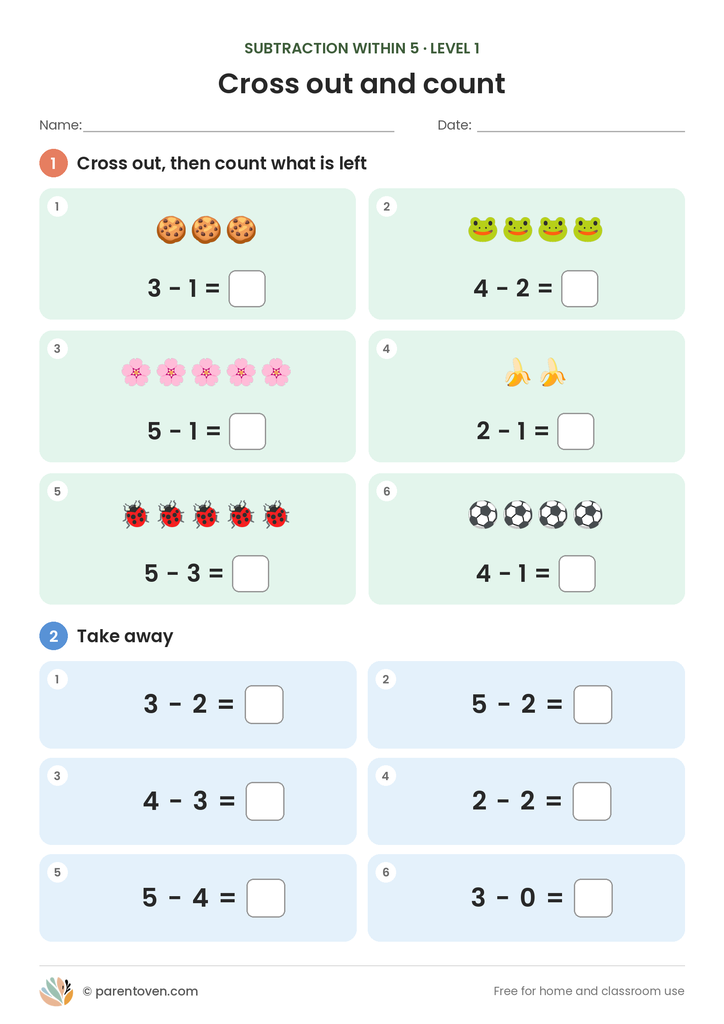
Subtraction within 5
Subtract within 5: First take-away sums with pictures.
Ages 4–6 · 2 levels + answers
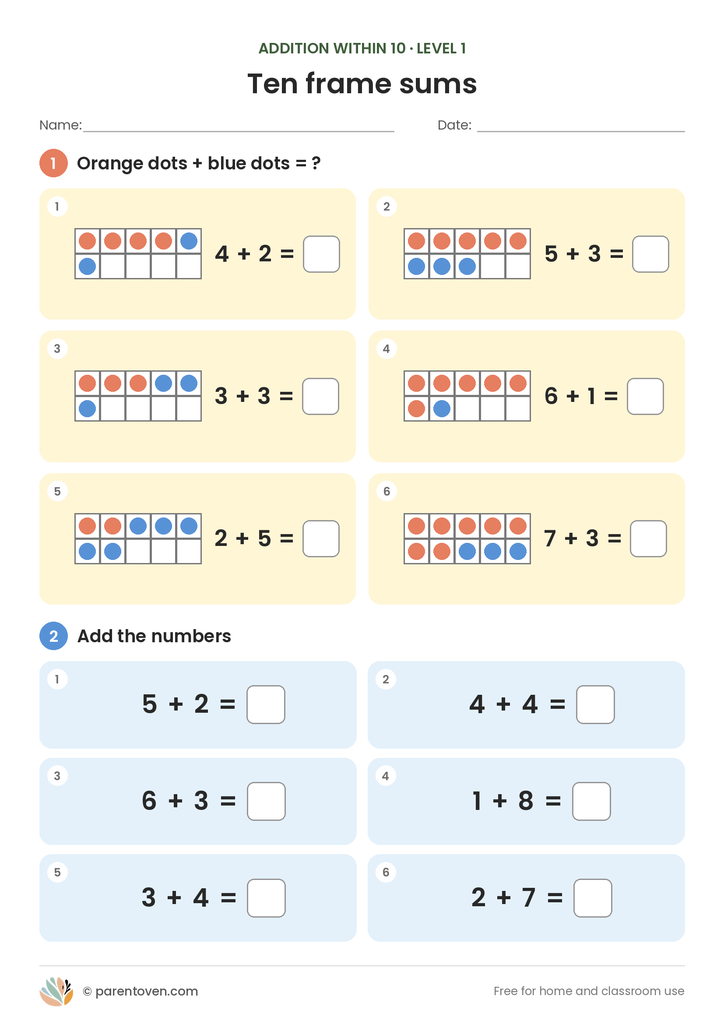
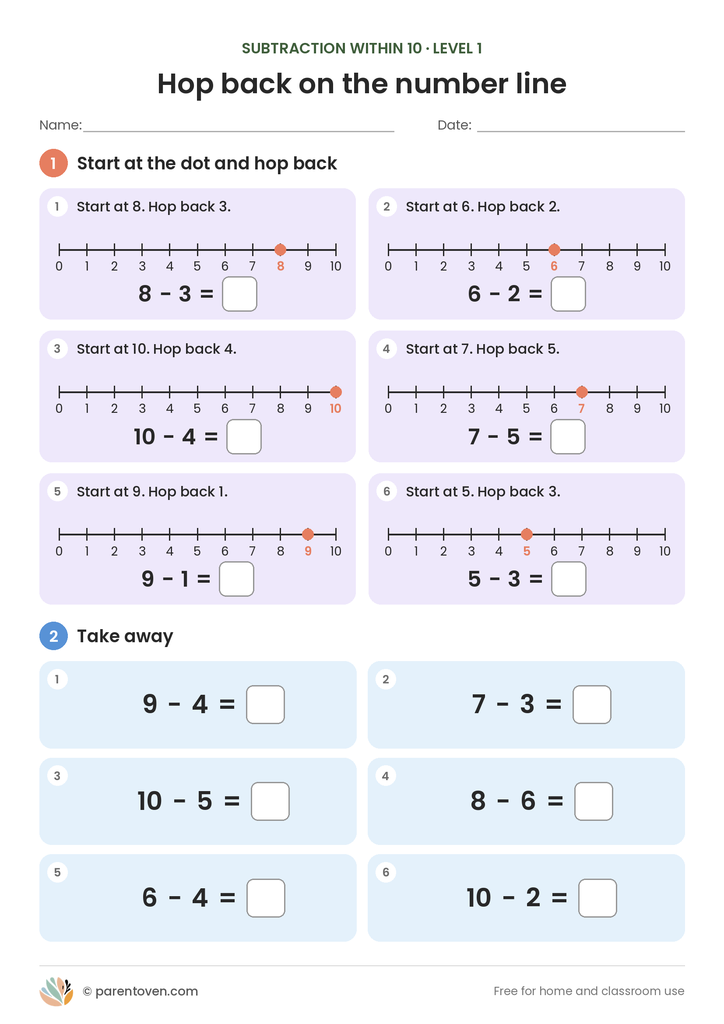
Subtraction within 10
Subtract within 10: Subtraction to ten using a number line.
Ages 5–7 · 2 levels + answers
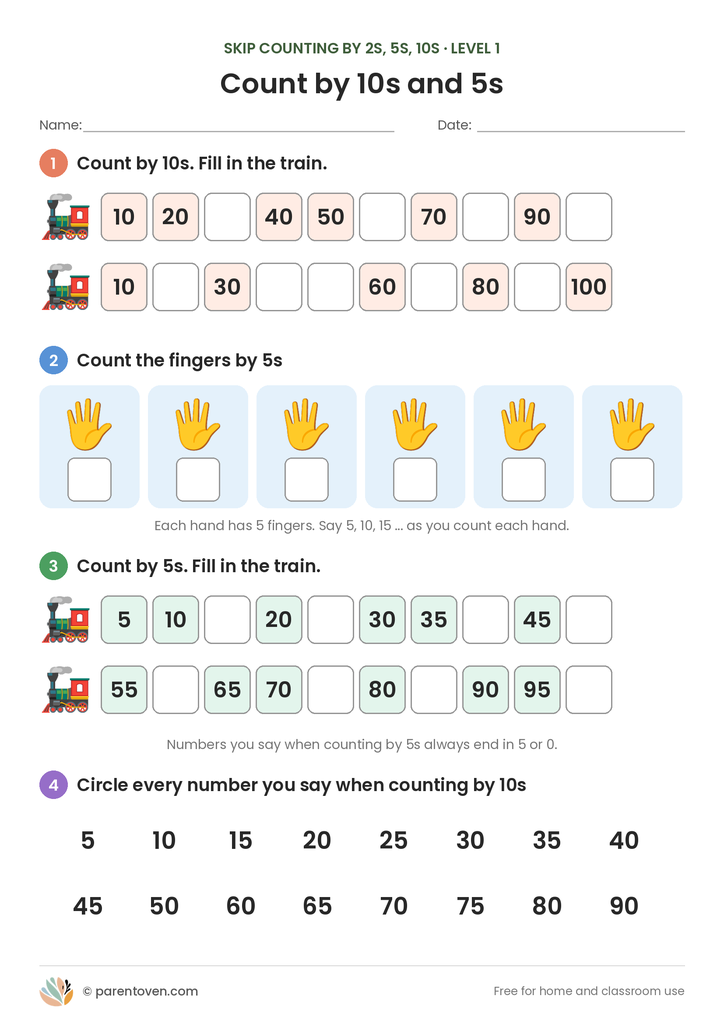
Counting in steps
A first step towards times tables.
Grade 2: numbers to 20, place value, time and money
For ages 7 to 8. See the full grade 2 worksheets.
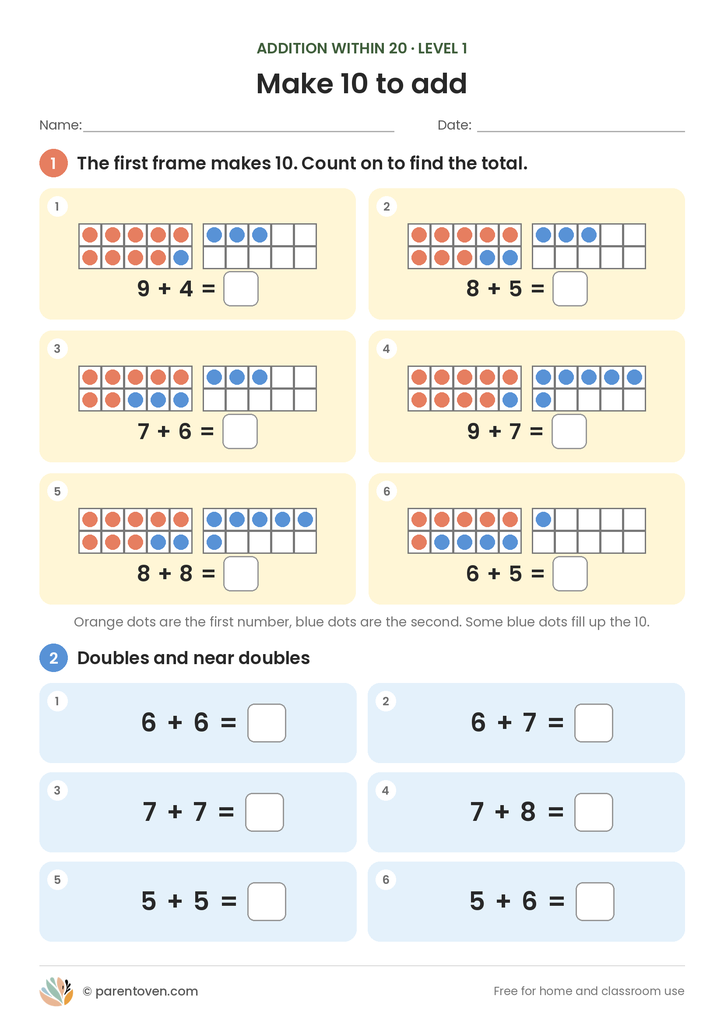
Addition within 20
Addition within 20: Add numbers with totals up to 20.
Ages 6–8 · 2 levels + answers
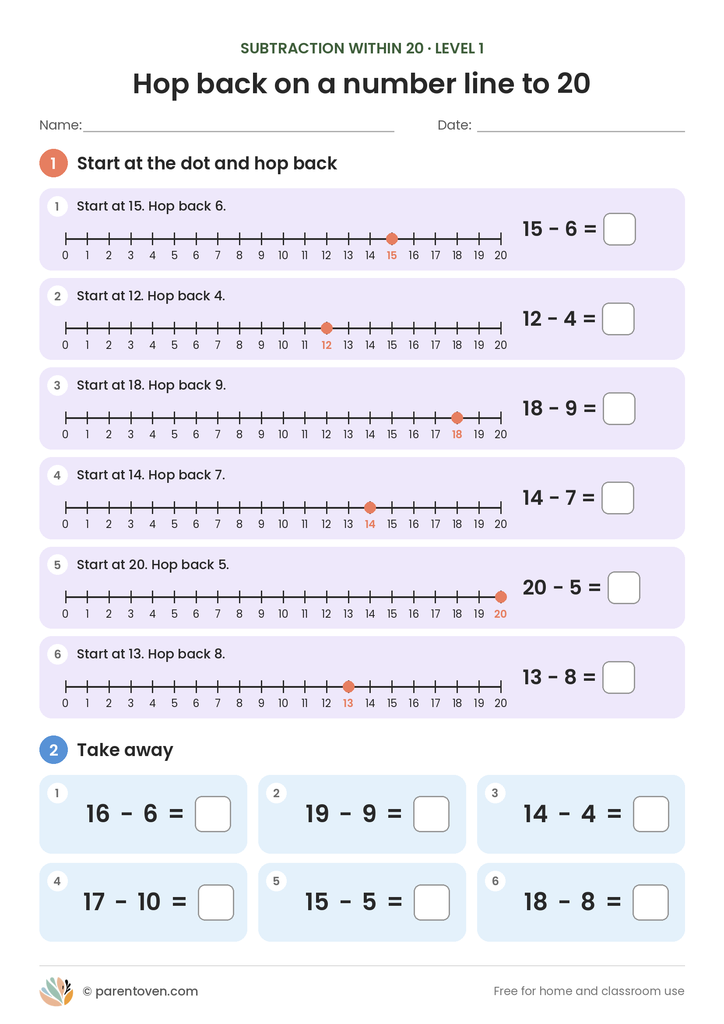
Subtraction within 20
Subtraction within 20: Take away from numbers up to 20.
Ages 6–8 · 2 levels + answers
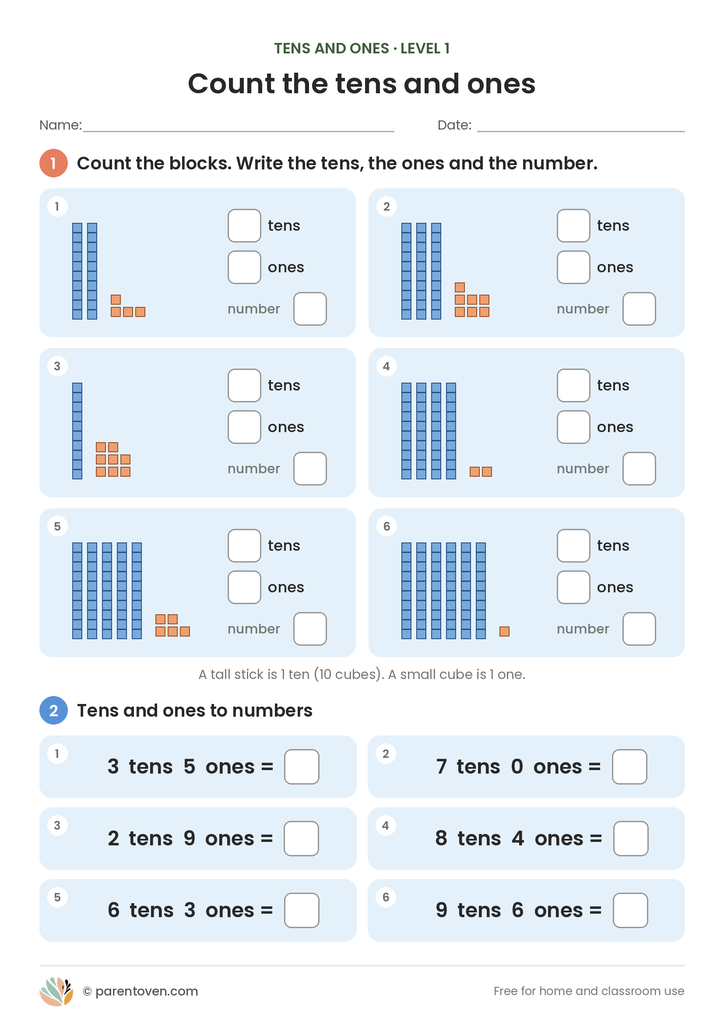
Place Value: Tens and Ones
Place value: Understand two-digit numbers as tens and ones.
Ages 6–8 · 2 levels + answers
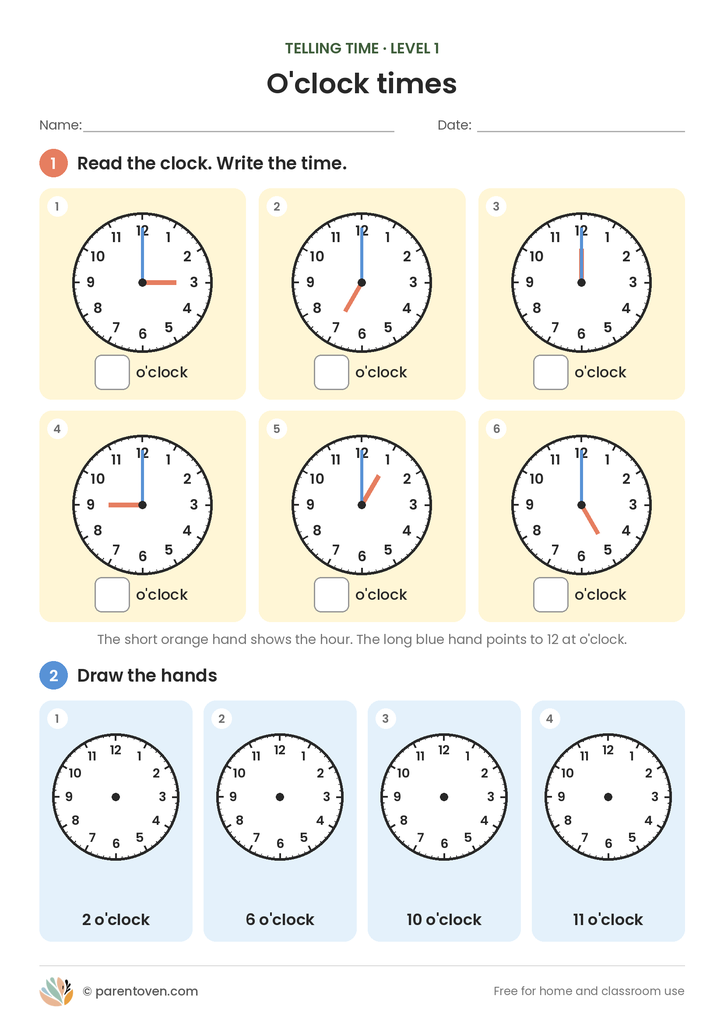
Telling Time: O’clock and Half Past
Telling time: Read and draw o’clock and half past times on an analogue clock.
Ages 6–8 · 2 levels + answers
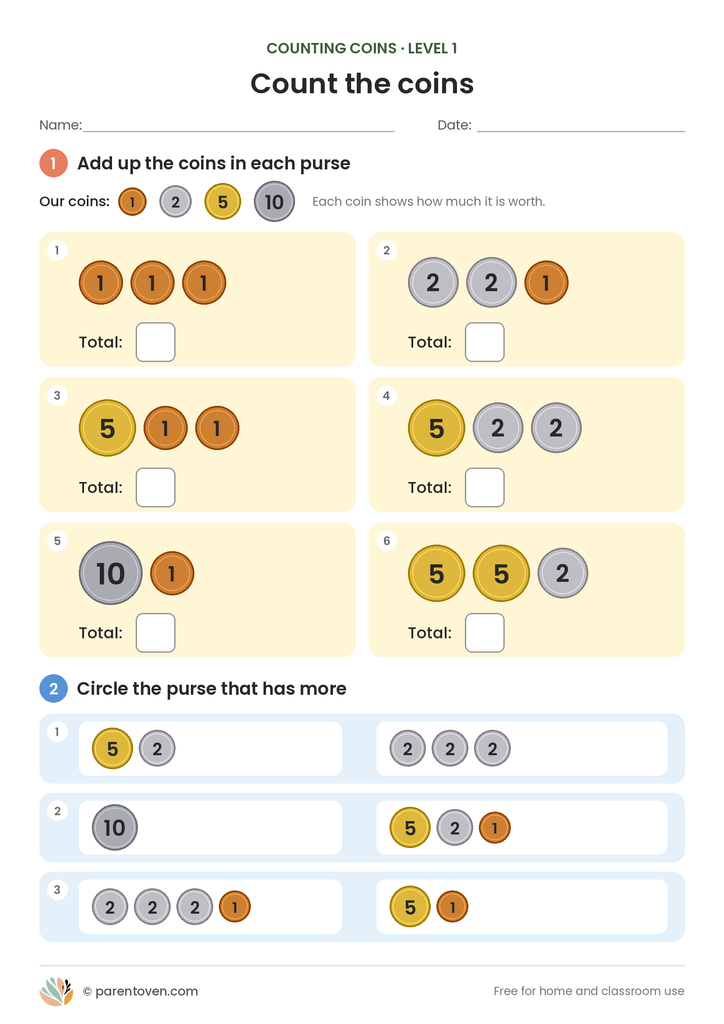
Money: Counting Coins
Money: Count coins and pay for things using simple coins worth 1, 2, 5 and 10.
Ages 6–8 · 2 levels + answers
How to Practise Maths at Home in 5 Steps
- Use real things first: toys, snacks, buttons and fingers.
- Say it out loud: “three and two more makes five.”
- Draw it: dots, tally marks or a quick number line.
- Then try the worksheet, Level 1 first.
- Keep it short: ten minutes of maths with a smile beats half an hour of tears.
Talk about numbers all day: counting stairs, sharing snacks, spotting patterns. Worksheets work best as a short add-on to that everyday talk.
Which worksheet for which age?
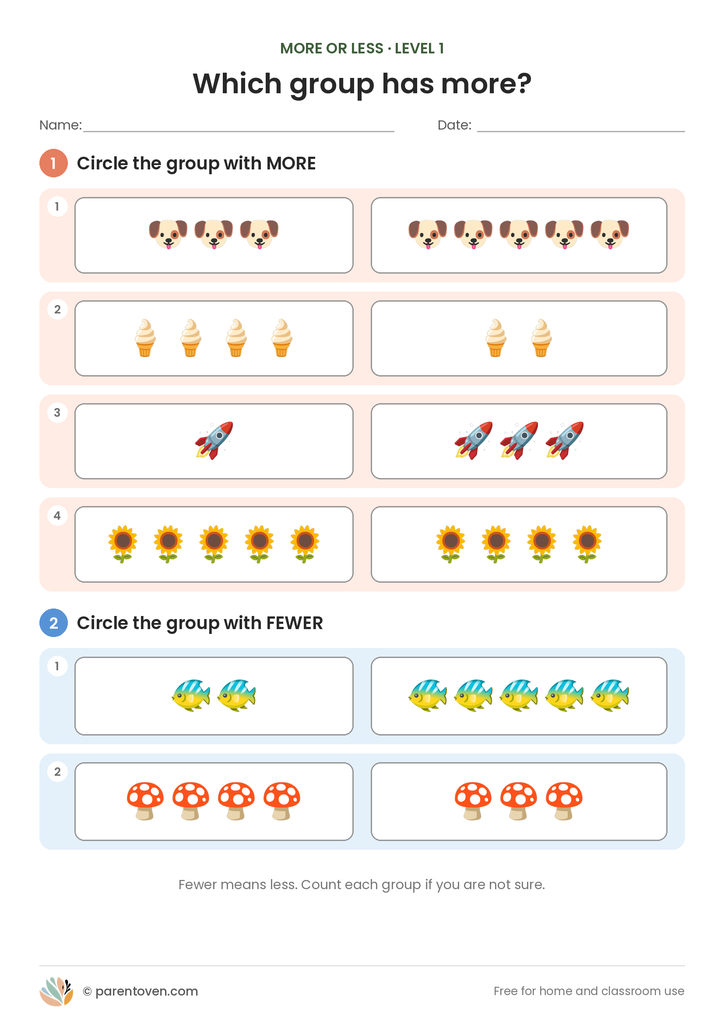
- Ages 3 to 4: counting objects, more or less and AB patterns.
- Ages 5 to 6: missing numbers, before, after and between, addition within 5 and subtraction within 5.
- Ages 6 to 7: addition within 10, subtraction within 10 and skip counting.
- Ages 7 to 8: addition within 20, subtraction within 20, place value, telling time and money.
See the full plan for each age on our preschool, kindergarten, grade 1 and grade 2 pages.
Two levels in every PDF
Page 1 is the easier level, with pictures, ten frames or number lines to help. Page 2 is harder, with plain number sums, missing numbers and a short story problem. Page 3 is the answer key. Children can start on either level.
More number practice
Learning to write numbers? Use number tracing 1 to 10 and 11 to 20. For counting to 100 and skip counting, print the free number charts.
Frequently Asked Questions
What age are these maths worksheets for?
They cover ages 3 to 8: counting, patterns and more or less for preschool, adding and taking away within 5 and 10 for kindergarten, skip counting for grade 1, and sums within 20, place value, time and money for grade 2. Each PDF has an easier and a harder level.
Is it maths or math?
Both are correct. Maths is used in British English and math in American English. The worksheets are the same either way.
Do the worksheets have answers?
Yes. Page 3 of every PDF is an answer key for both levels, so you can check work quickly.
Which maths worksheet should we start with?
Start with counting objects and more or less. When your child can count ten things reliably, move on to addition within 5, then subtraction within 5.
Can I use these worksheets in my classroom?
Yes. Every worksheet is free for home and classroom use. Please share the page link rather than re-uploading the PDF.
Can you make a worksheet on another topic?
We would love to hear your idea. Email us at parentoven@gmail.com.
More Free Worksheets
Also try: shapes · numbers 11 to 20 · all free worksheets