

Learning Worksheets Sight Words Sight word “ate”
Free printable PDF · Dolch primer
Sight Word “ate” Worksheet – Trace, Write and Find
“Ate” is what we say about food after it is gone: “I ate my apple”. It sounds just like the number eight, which children find funny.
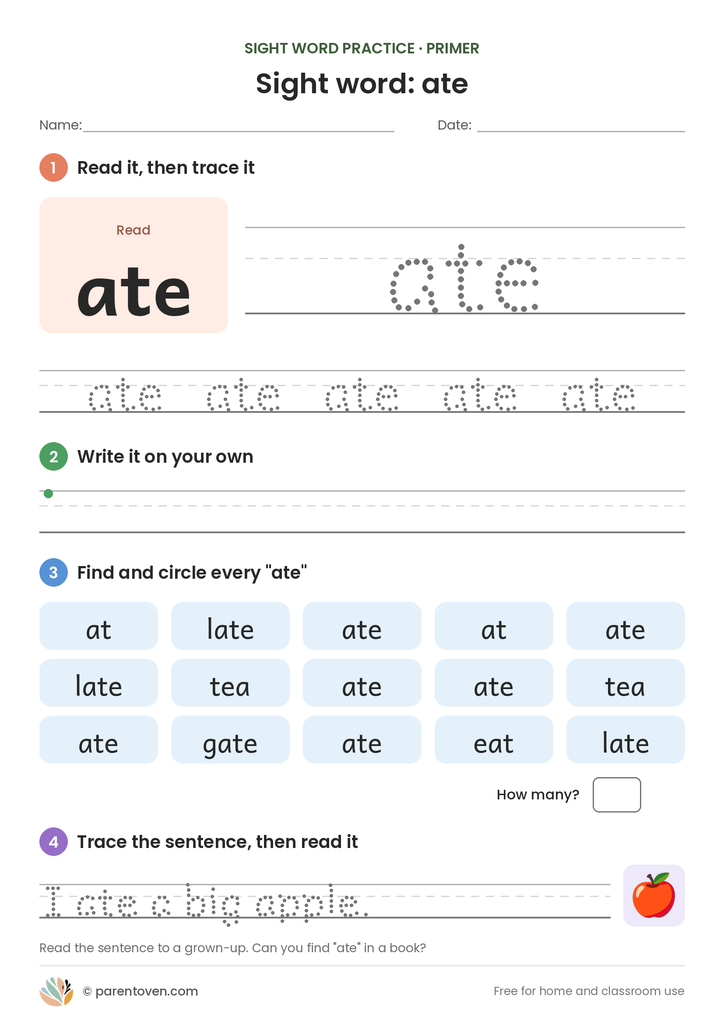
What’s on the “ate” worksheet
Read and trace “ate”, write it alone, circle it among at, tea, eat, gate and late, then trace “I ate a big apple.”
Prints on A4 or US Letter (choose “Fit to page”).
How to teach “ate”
Show that ate is at with a silent e on the end, and that the e makes the a say its name. Compare at and ate on two cards. Then talk about yesterday’s meals in full sentences: “I ate toast for breakfast.” Children love telling you what they ate.
Sentences with “ate”
- I ate a big apple.
- The dog ate my sock!
- We ate pizza for tea.
- Who ate the last cake?
Game: What did Teddy eat?
Feed a soft toy pretend food from a small basket. Then ask “What did Teddy eat?” Your child reads a card that says “Teddy ate…” and names the food. Write a list called “Teddy ate” and read it back at the end.
Practise next
Try “eat” and “came” next: they help your child talk about what happened, which is how ate is used.
Questions about “ate”
Why do ate and eight sound the same?
They are homophones: words that sound alike but have different spellings and meanings. Show a picture of the number 8 next to the word ate and enjoy the joke.
What is the difference between ate and eat?
Eat is happening now or every day; ate already happened. Use both in one sentence: “I eat lunch at twelve. Today I ate soup.”
More answers in the sight words FAQ.
More Free Sight Word Worksheets
Also try: CVC word worksheets · lowercase letter tracing · all free worksheets · bedtime stories