

Learning Worksheets Sight Words Sight word “had”
Free printable PDF · Dolch first grade · ages 6–7
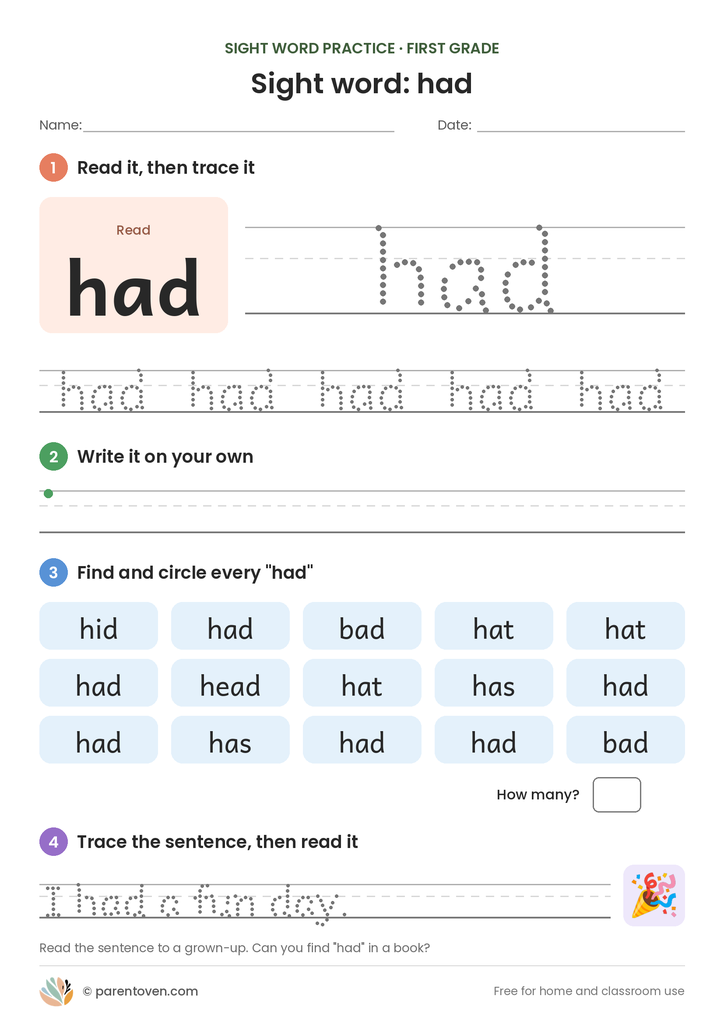
Sight Word “had” Worksheet: Read, Trace and Circle
“Had” is the past form of have: I had a bath, we had fun. It turns up in almost every story told about yesterday.
Try this game: Yesterday I had
Take turns saying something you had yesterday: I had a banana, I had a nap. If you can, act it out while the other person guesses. Hold up the had card each time.
Teaching tips for “had”
Had can be sounded out, h-a-d, so let your child blend it. Then turn it into a conversation about the day: what did you have for lunch? I had pasta. Write three sentences starting with “I had…” and draw a picture for each one.
“had” in a sentence
- I had a fun day.
- We had soup for lunch.
- She had a red hat.
- The dog had a bath.
What to learn next
Good next words are “has” and “his”, because they all begin with h and describe owning something.
You will find “had” at number 14 of 41 on the Dolch first grade list. Most children reach it at ages 6–7, once the primer words feel easy.
Inside the free “had” PDF
Four short activities: trace “had”, write it on your own, find it in a grid with has, hat, bad, hid and head, and trace the sentence “I had a fun day.”.
“had”: quick answers
Why is had a sight word if it is easy to sound out?
It is one of the most common words in English, so recognising it instantly helps reading flow.
What is the difference between had and has?
Has is about now (she has a cat). Had is about the past (she had a cat). Only the last letter is different.
More First Grade Sight Word Worksheets
Also try: phonics worksheets · CVC word worksheets · cursive letter tracing · all free worksheets