
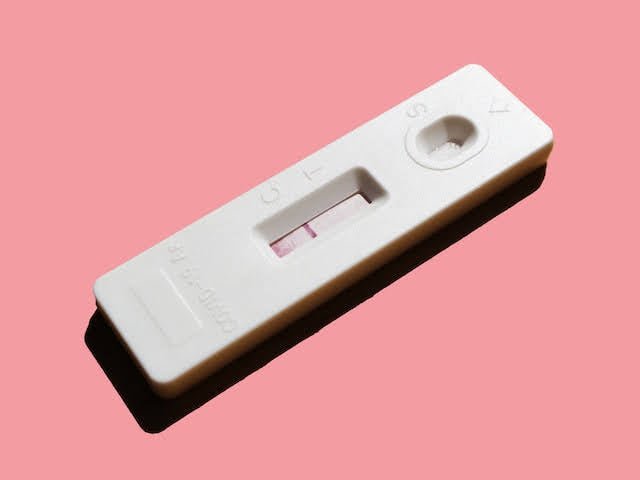
When you find out you are pregnant, you are suddenly introduced to a new vocabulary of medical terms. One of the most important acronyms you will hear is hCG (Human Chorionic Gonadotropin).
A quick note: This article is for general information and isn’t medical advice. Every pregnancy is different. Talk to your doctor or midwife about your own situation, and get urgent medical help if something feels wrong. Read our disclaimer.
Last reviewed: November 2026. Checked against guidance from MedlinePlus, ACOG and the NHS. See sources.
Often called the “pregnancy hormone,” hCG is the marker that turns a pregnancy test positive. But beyond that first “yes,” doctors use hCG levels to monitor the health of a pregnancy. If you are worried about your numbers, you aren’t alone.
Here is a detailed look at how hCG works, what “normal” levels look like, and the link between hormone levels and miscarriage risk.
What is hCG?
hCG is a hormone produced by the cells that will eventually form the placenta. These cells nourish the fertilized egg after it implants in the uterine wall.
As the fertilized egg divides and develops into a blastocyst and eventually a fetus, hCG production ramps up to support the pregnancy.
- Detection: hCG can show up in blood and urine as early as about 10 days after conception (MedlinePlus).
- The rise: In a healthy early pregnancy, hCG usually rises quickly. A well-known study found a typical rise of about 124% over 2 days, but a rise as slow as about 53% over 2 days was still seen in healthy pregnancies, so “doubling” is a rough guide, not a rule (Barnhart et al., 2004).
The Link Between hCG and Miscarriage
Miscarriage is, sadly, common: early pregnancy loss happens in about 10 in 100 known pregnancies (ACOG). While causes vary (genetics, hormonal issues, uterine abnormalities), hCG trends can often provide the first clue that a pregnancy is not viable.
Low hCG Levels
Lower-than-expected hCG levels can be a sign of a possible miscarriage or an ectopic pregnancy, which is why doctors use the test to help assess an early pregnancy loss (MedlinePlus).
- There is no single cut-off: Normal ranges are very wide. MedlinePlus lists, for example, 217 to 8,245 mIU/mL at 5 weeks and 152 to 32,177 mIU/mL at 6 weeks after the last period, and ranges vary between labs (MedlinePlus). One number on its own cannot tell you whether a pregnancy is healthy.
- The Trend: The risk increases as levels decrease. However, a single low number isn’t a diagnosis. It could simply mean your dates are off (you ovulated later than you thought) or the pregnancy is developing slowly.
High hCG Levels
Surprisingly, extremely high levels can also indicate complications.
- Molar Pregnancy: A higher-than-normal level can be a sign of a molar pregnancy, a rare problem where the baby and placenta do not develop as they should after conception (NHS, MedlinePlus).
- Multiples: Higher numbers can also simply mean twins or triplets (MedlinePlus).
What to Expect During Testing
Doctors generally use two types of tests:
- Urine Test (Qualitative): A simple “Yes/No.”
- Blood Test (Quantitative): Measures the exact amount of hormone in the blood.
If your doctor suspects an issue, they will likely order “Serial Beta hCGs.” This involves taking two blood tests 48 hours apart. They are looking for the trend (is it rising as expected?) rather than a specific number. If levels are falling or rising too slowly, they may follow up with an ultrasound or progesterone testing to confirm the viability of the pregnancy.
The Bottom Line
hCG is a vital tool for monitoring pregnancy, but it is just one piece of the puzzle. Numbers vary wildly from woman to woman. If you are concerned about your levels, the best resource is your healthcare provider, who can look at your unique medical history.
Get emergency help if you are pregnant and have vaginal bleeding with severe tummy pain, pain in your shoulder, feeling faint or dizzy, or heavy bleeding (soaking a pad soon after putting it on). These can be signs you need treatment straight away (NHS).
Sources
We checked this article against these official and expert sources. Links were checked on 1 November 2026.
- MedlinePlus (US National Library of Medicine). HCG blood test – quantitative
- PubMed. Barnhart KT et al. Symptomatic patients with an early viable intrauterine pregnancy: HCG curves redefined (Obstetrics & Gynecology, 2004)
- ACOG (American College of Obstetricians and Gynecologists). Early Pregnancy Loss
- NHS. Molar pregnancy
- NHS. Miscarriage
Last reviewed: November 2026. This article is for general information and isn’t medical advice. Always talk to your doctor about your own situation.
Leave a Reply