Learning Worksheets UKG
Free printable PDFs · ages 5–6 · English, maths, EVS, Hindi
UKG Worksheets (Ages 5–6): Free Printable PDFs for Every Subject
Free UKG worksheets for 5 and 6 year olds, sorted by subject and by where your child is in the year: letter sounds and first reading, numbers to 50 and number names, comparing and measuring, EVS topics like my body and transport, Hindi words, and short online games for practice on a phone.
Every new set here has six A4 sheets in three levels, an answer key and an ink-saving black and white version. Start with the skill your child is working on now, not the whole list.
Also called KG2, Senior KG or Balvatika 3. Younger child? See kindergarten worksheets or preschool worksheets.
Jump to: What UKG covers · English · Maths · EVS · Hindi · Games · Drawing · A simple week · FAQs
What children learn in UKG
UKG is the bridge year into Class 1. By the end of it, most children can hold a pencil properly, write their name, recognise letters and their sounds, read a few short words, and count and compare small numbers with confidence.
There are two yardsticks worth knowing. India’s national goals for this age come from NCERT’s NCF for the Foundational Stage (2022) and the NIPUN Bharat targets for Balvatika. They are deliberately gentle. Many private schools then add more, especially in maths and Hindi. The table shows both, so you can see what really matters and what is extra.
| Area | National goal by the end of UKG | What many schools add |
|---|---|---|
| Reading | Knows letters and their sounds. Reads simple two- and three-letter words. Spots familiar words on signs and packets. | CVC words, vowels and consonants, first sight words, short sentences by the end of the year. |
| Writing | Holds a pencil properly, forms recognisable letters and writes their own first name. | All small and capital letters without tracing, copying short words. |
| Maths | Counts objects and reads numbers to about 10. Compares groups (more, less, equal). Copies patterns, puts things in order, uses words like taller and heavier. | Numbers to 50 or 100, number names, before and after, >, < and =, sums within 10. |
| Hindi | The same literacy goals apply in the child’s school language. | स्वर and व्यंजन, words without matras, then first matras (आ, इ, ई) late in the year. |
| EVS and GK | Curiosity about self, family, plants, animals, weather and the neighbourhood, mostly through talk and play. | Body parts and senses, family, community helpers, transport, living and non-living, good habits, safety. |
Three levels through the year
- Start of UKG (Level 1): small letters and their sounds, numbers to 20, counting and comparing groups, body parts, pencil-control lines.
- Middle of UKG (Level 2): vowels, CVC words, number names, numbers to 50, the signs >, < and =, transport and helpers.
- End of UKG (Level 3): two- and three-letter words alone, this and that, number order, measuring, adding and taking away within 10, Hindi words without matras.
English worksheets for UKG
Writing and reading grow together this year. Start with letter sounds, then the five vowels, then blend sounds into short words. Read aloud every day; it does more for reading than any worksheet.
Phonics · new set
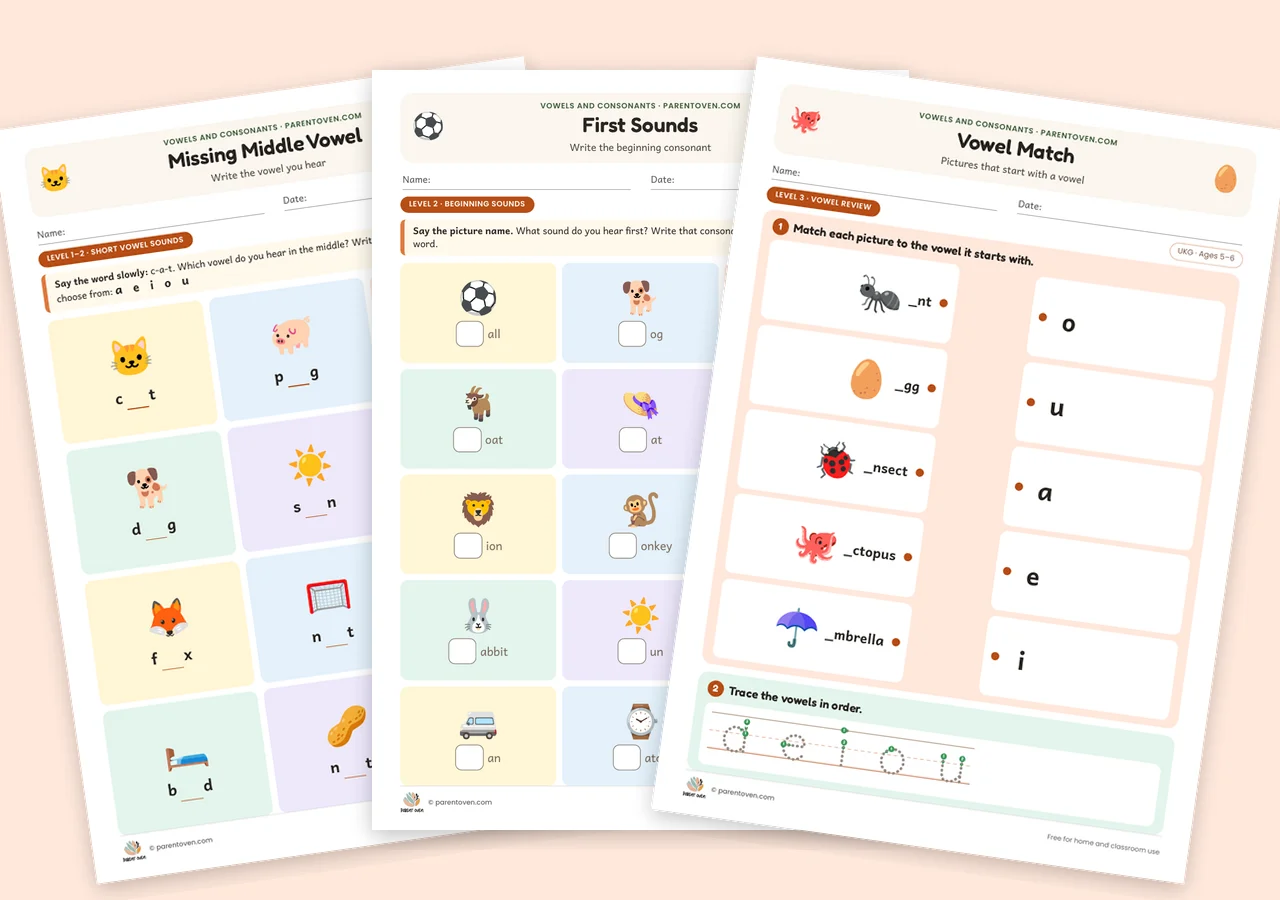
Vowels and consonants
Trace a, e, i, o, u, find the missing middle vowel, and hear first and last sounds. Six sheets with answers.
Reading · new set
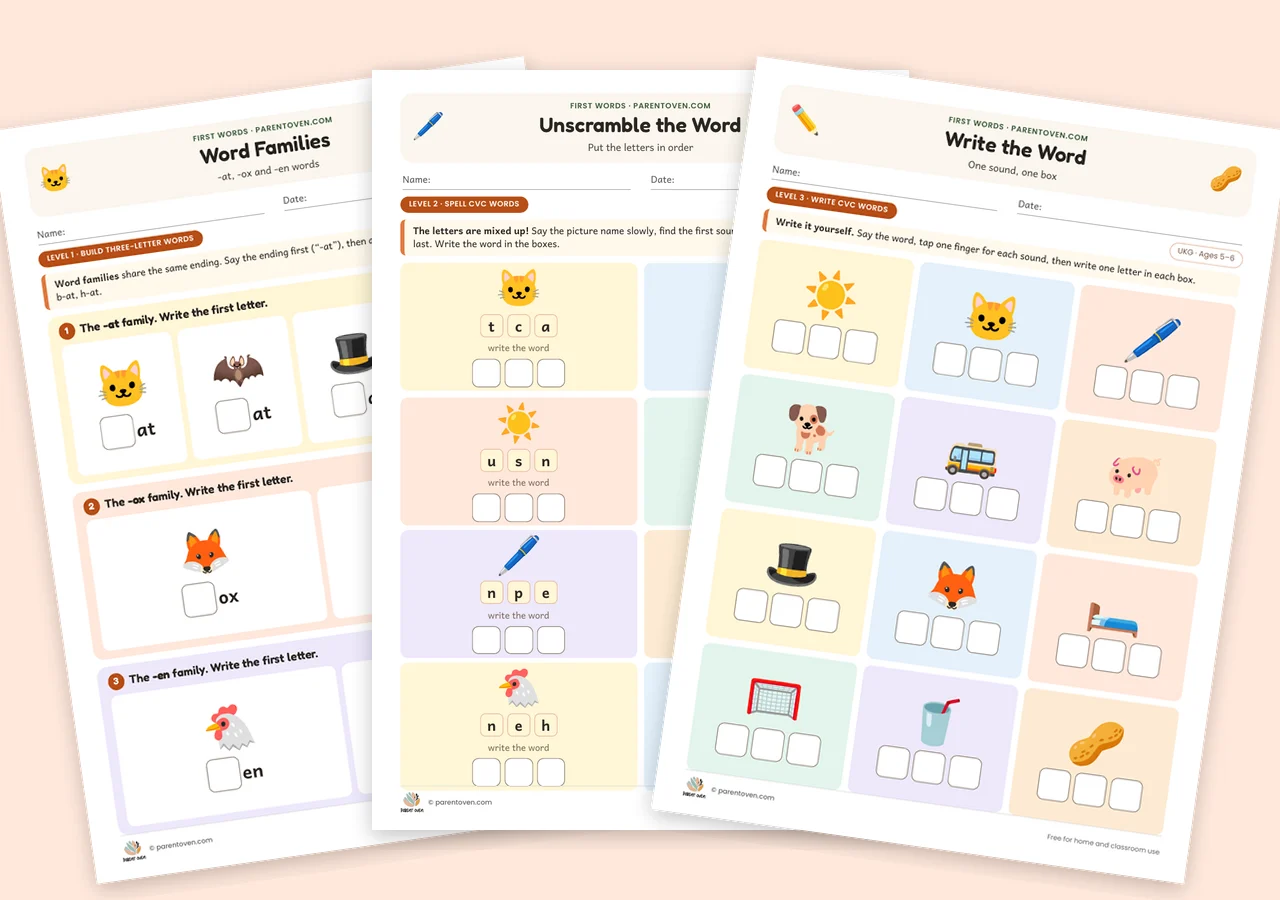
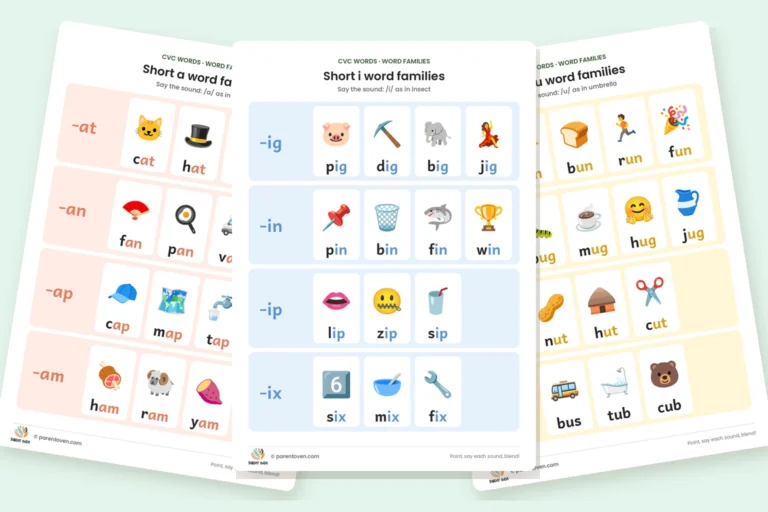
Two and three letter words
Two-letter words, word families, unscramble, read and circle, and writing CVC words alone.

Grammar · new set
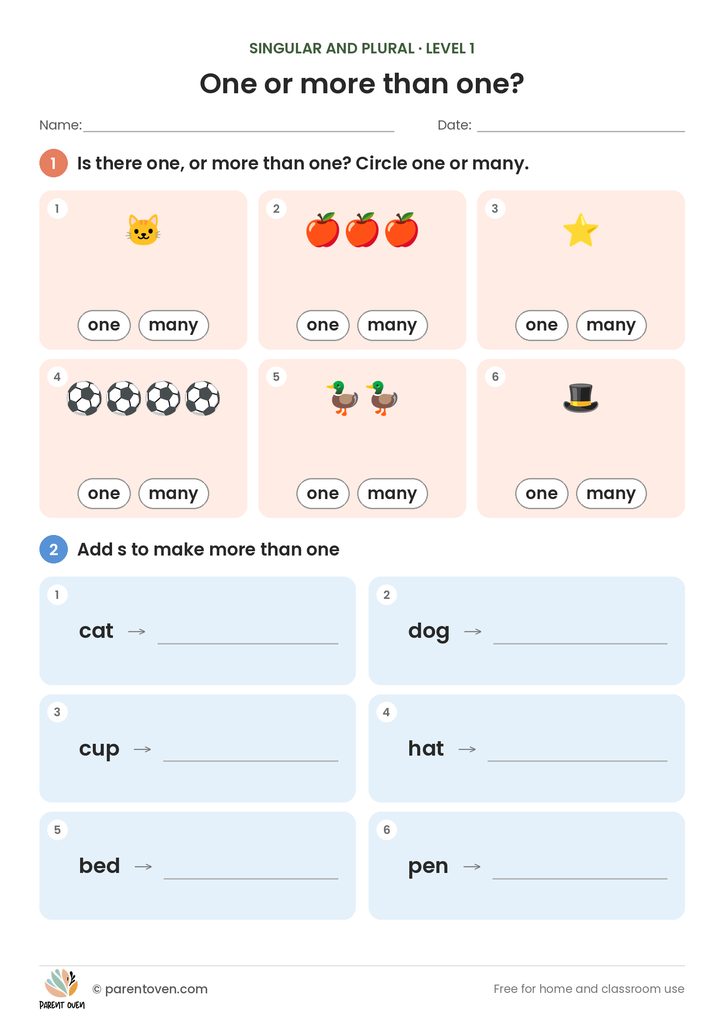
This, that, these, those
Near and far, one and many, with is and are. Pictures make the grammar easy to see.
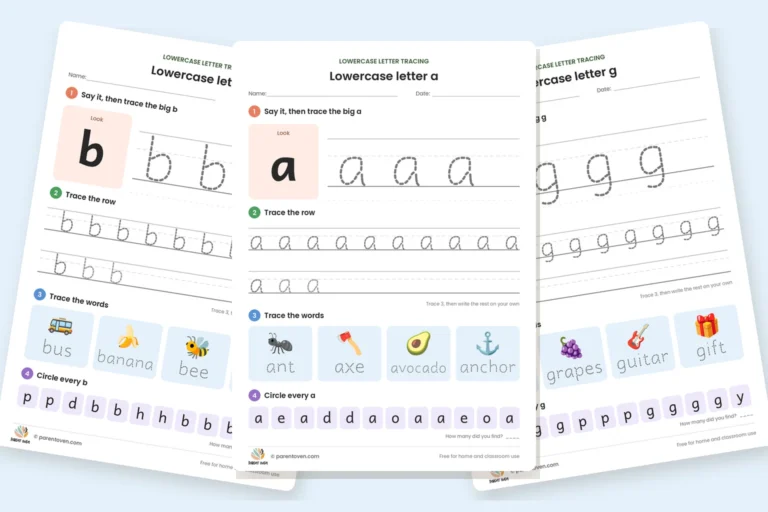
Writing · start of UKG
Lowercase letters a to z
Small letters are what children read most, so they come first in UKG. One page per letter with a start dot and arrows.
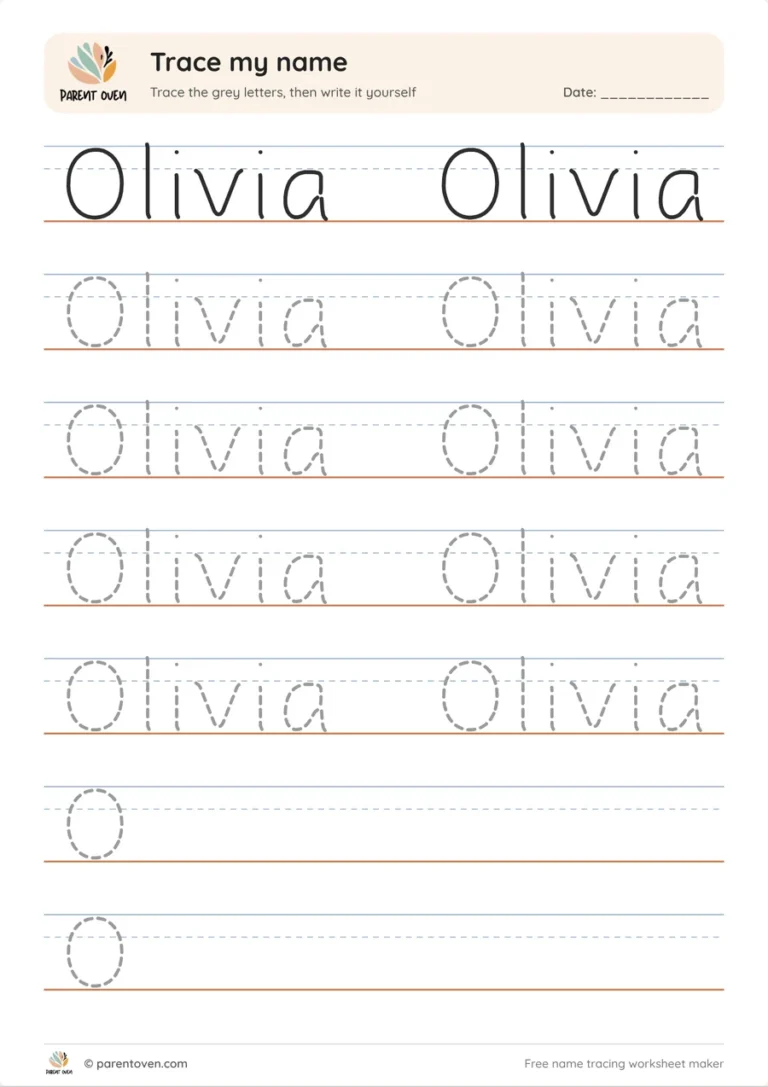
Writing · free tool
Name tracing maker
Writing their own first name is one of the national goals for this age. Print a tracing sheet in a minute.
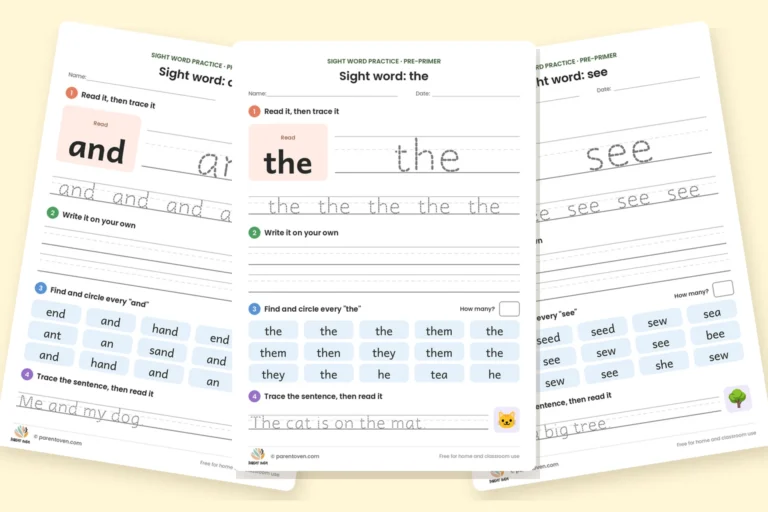
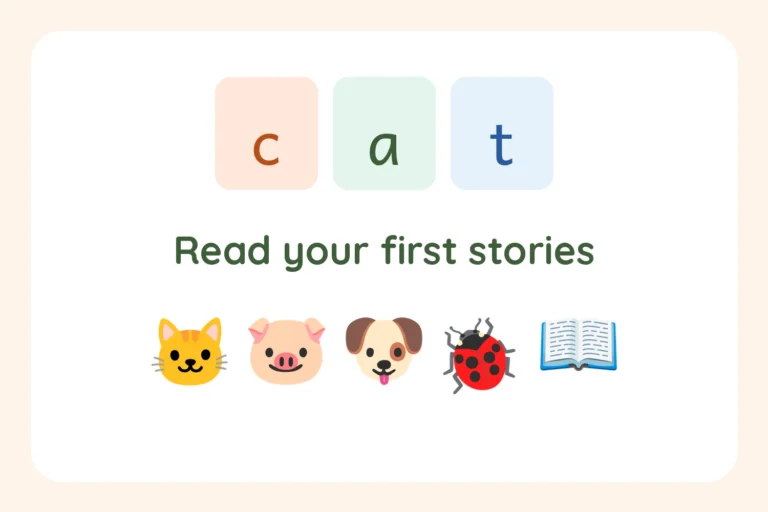
Reading · end of UKG
Reading path
Short decodable stories that use only the sounds your child has learnt.
Maths worksheets for UKG
UKG maths is about number sense: knowing that 7 is more than 4 without counting from one, seeing that 13 is ten and three, reading number names, and putting numbers in order. Count real things first, then use the sheets to practise.

Comparing · new set
Greater than, less than
Compare groups, meet >, < and =, compare numbers to 20 and 50, and put them in order.
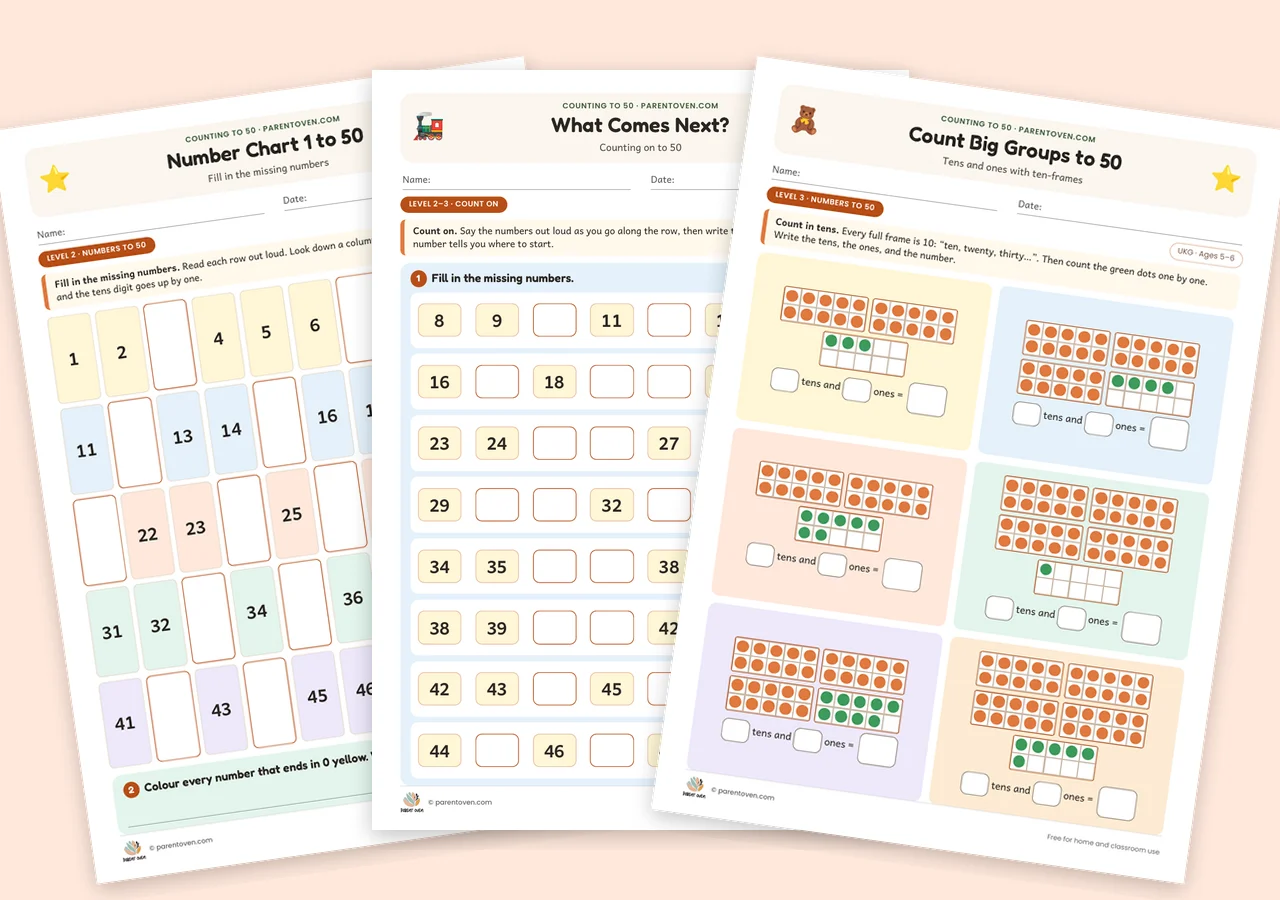
Counting · new set
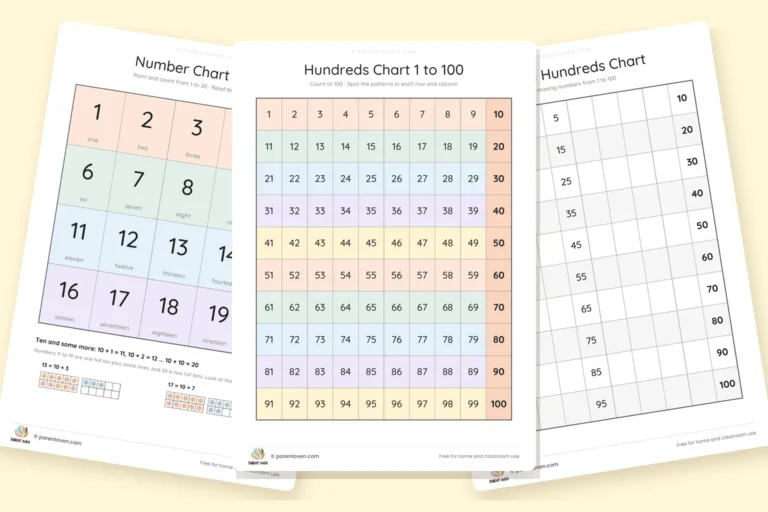
Counting 1 to 50
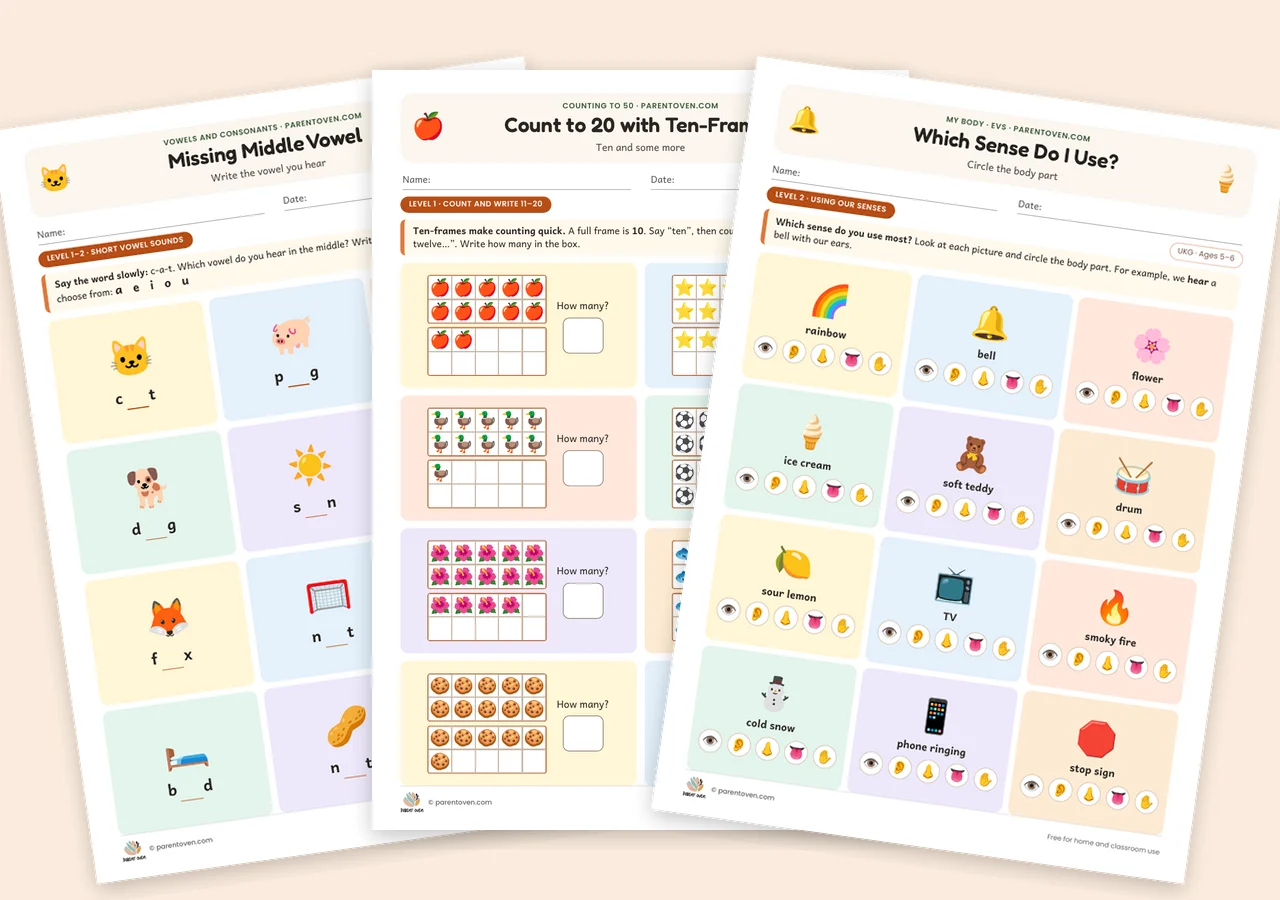
Ten-frames, a 1 to 50 chart, tracing 21 to 30, counting on and counting backwards.
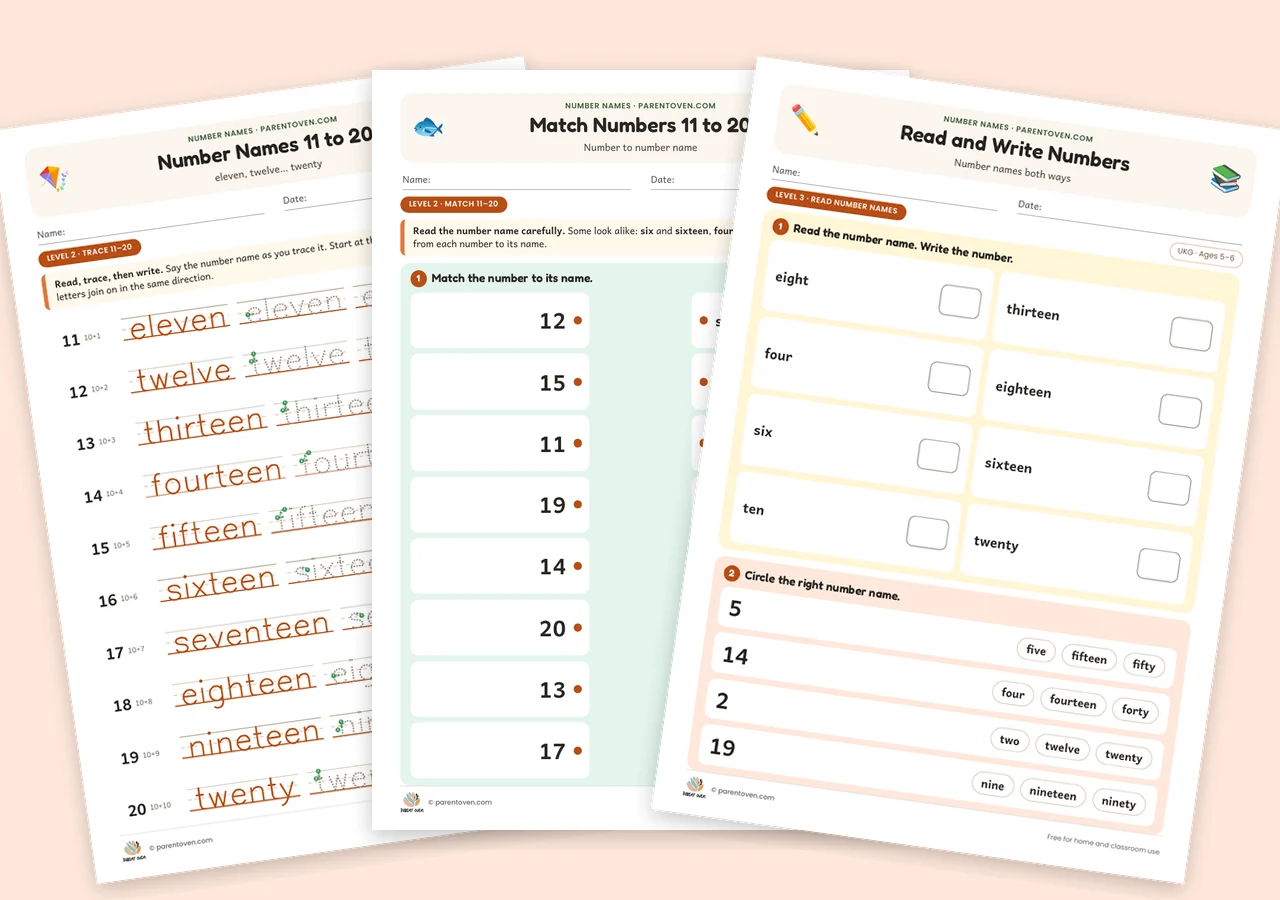
Numbers · new set
Number names 1 to 20
Trace one to twenty, match numbers to names and read look-alikes like four and fourteen.

Measuring · new set
Measurement
Tall and short, long and short, heavy and light, full and empty, with real-life pictures.
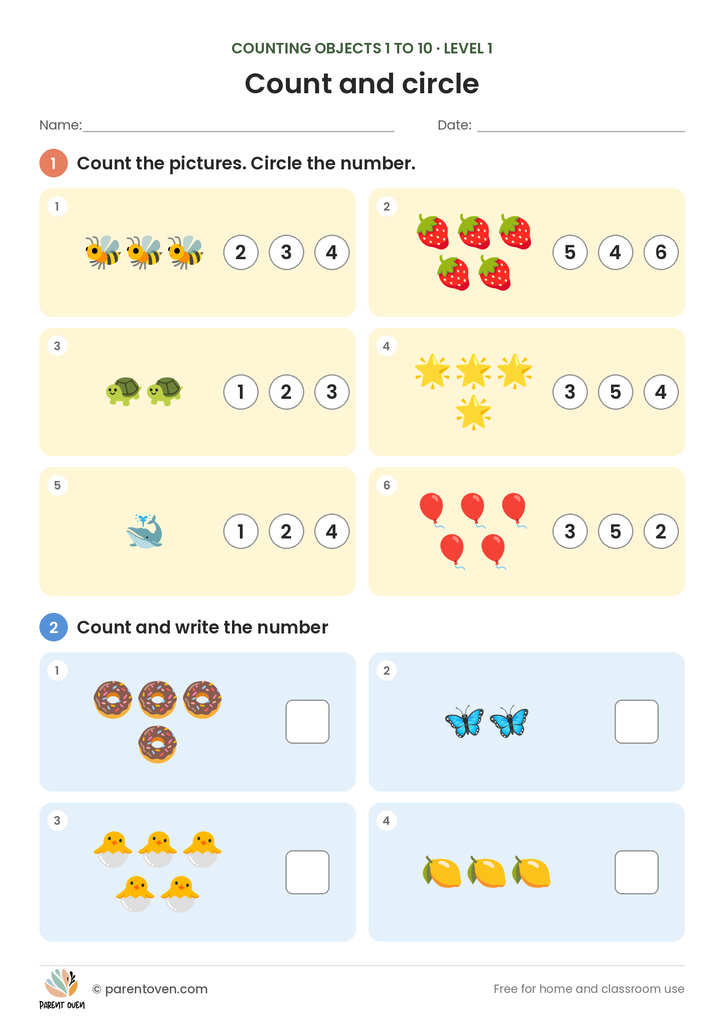
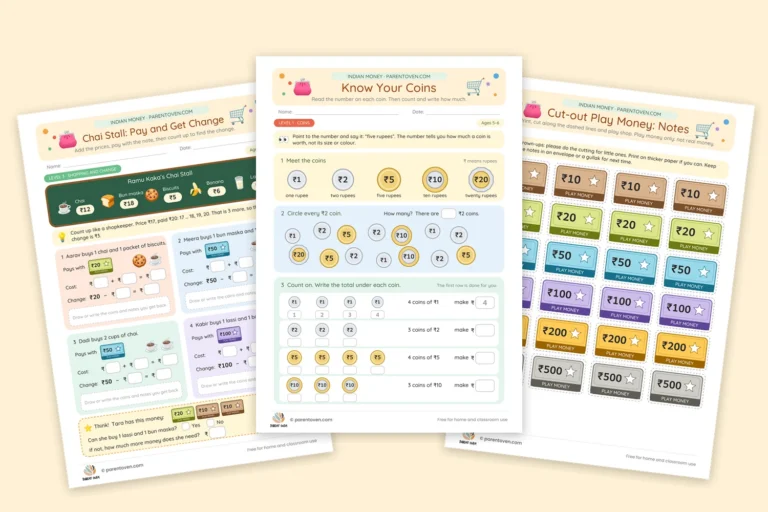
Counting
Counting objects 1 to 10
Count pictures one by one and write how many. Exactly what the national goal asks for.
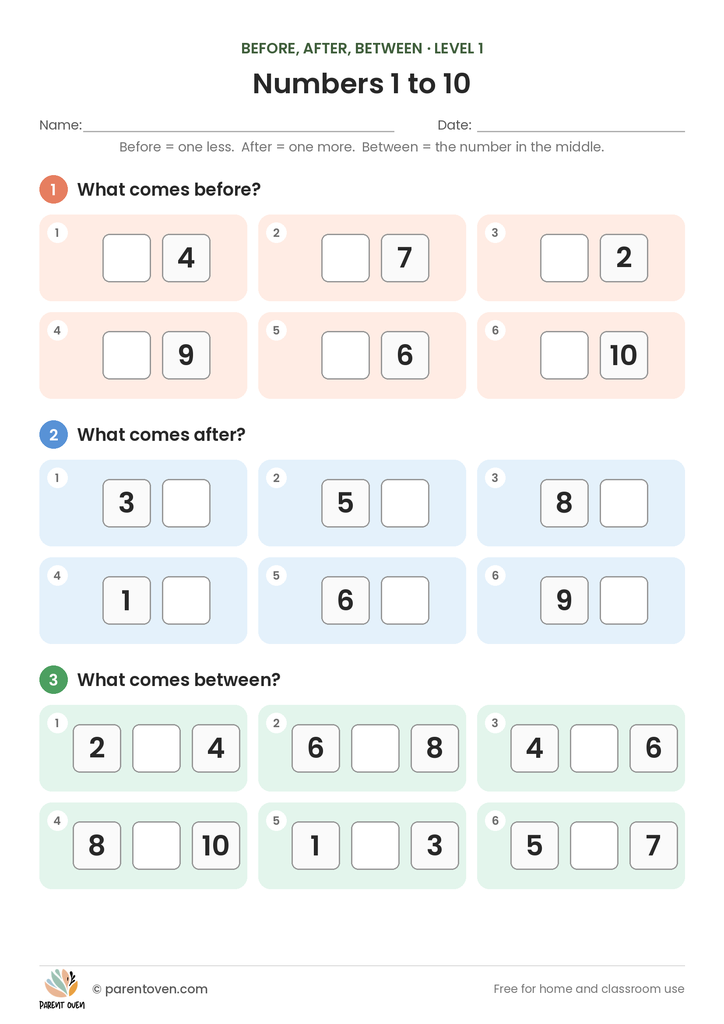
Number order
Before, after and between
Which number comes just before 14? Number sense to 20 with number lines.

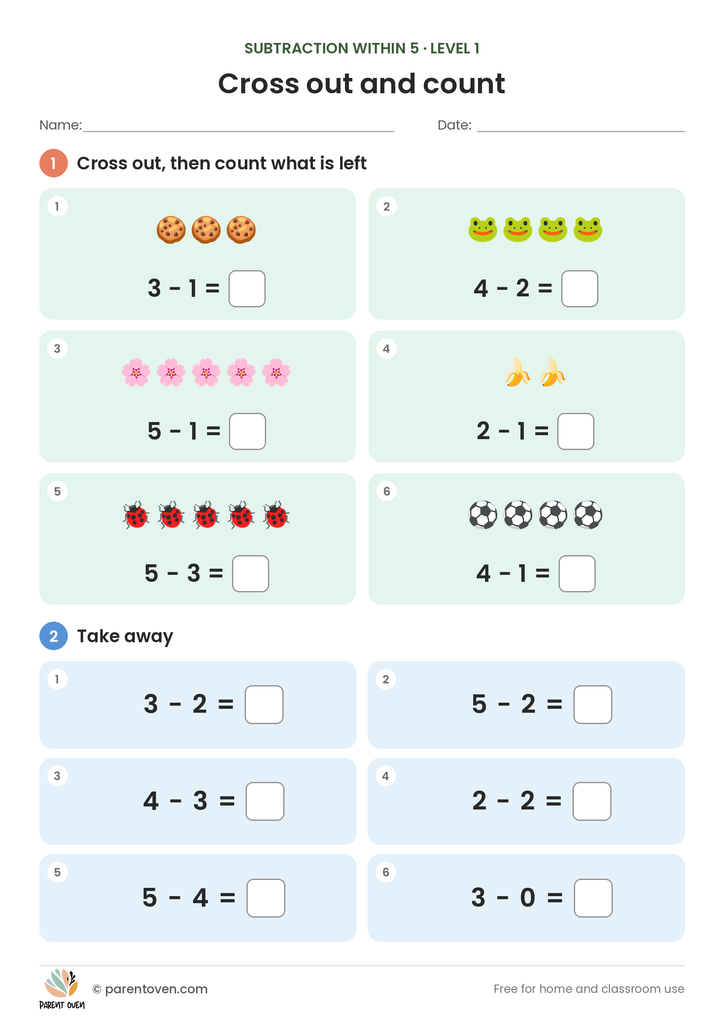
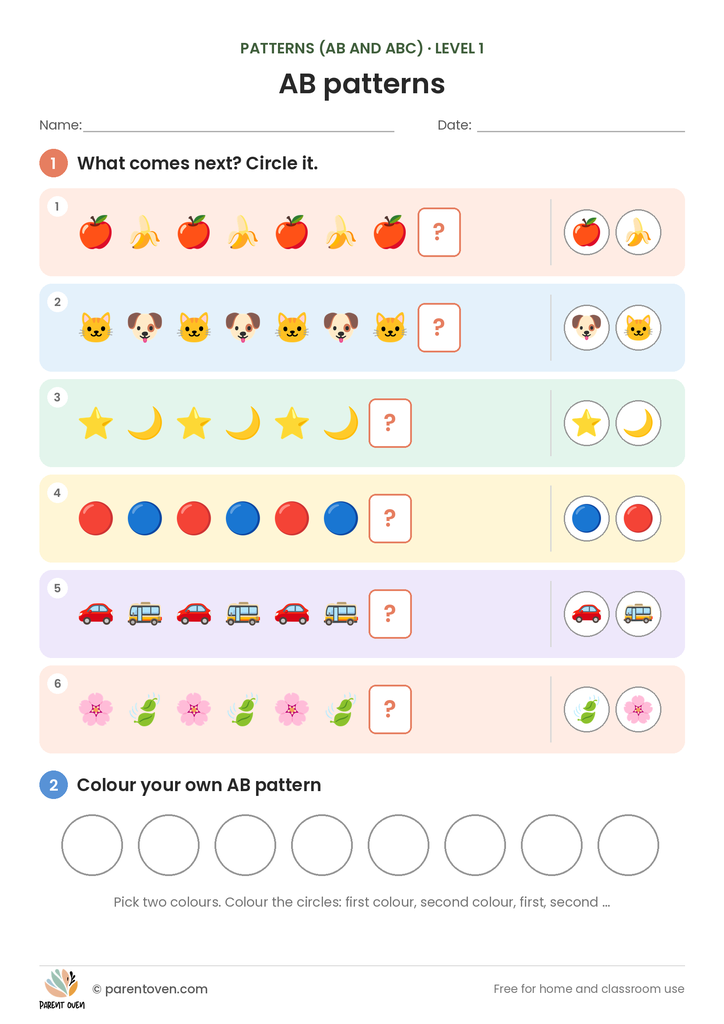
Patterns
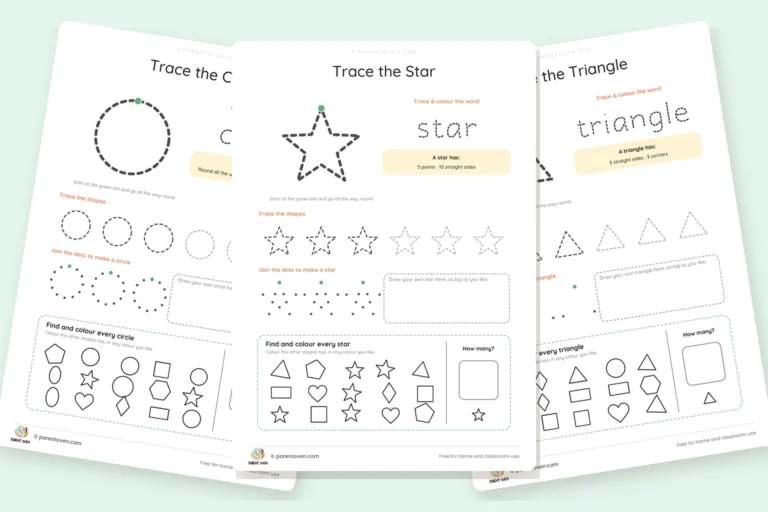
Patterns (AB and ABC)
Copy and continue colour and shape patterns, a national maths goal at 5 to 6.
EVS and general awareness
EVS in UKG is about noticing the world: the body, family and helpers, transport, plants and animals, and staying healthy and safe. The new EVS sets come with things to do and talk about, not just things to colour.

My body · new set
My body and five senses
Body parts, sense organs, which sense we use and which body part does the work.

People · new set
Family and community helpers
My family tree, helpers and their tools, and where each helper works.

Transport · new set
Transport: land, water, air
Sort vehicles, helper vehicles, count wheels and learn road safety.

Science · new set
Living and non-living things
What grows, breathes, eats and moves? Sort, tick and find the odd one out.
Health · new set
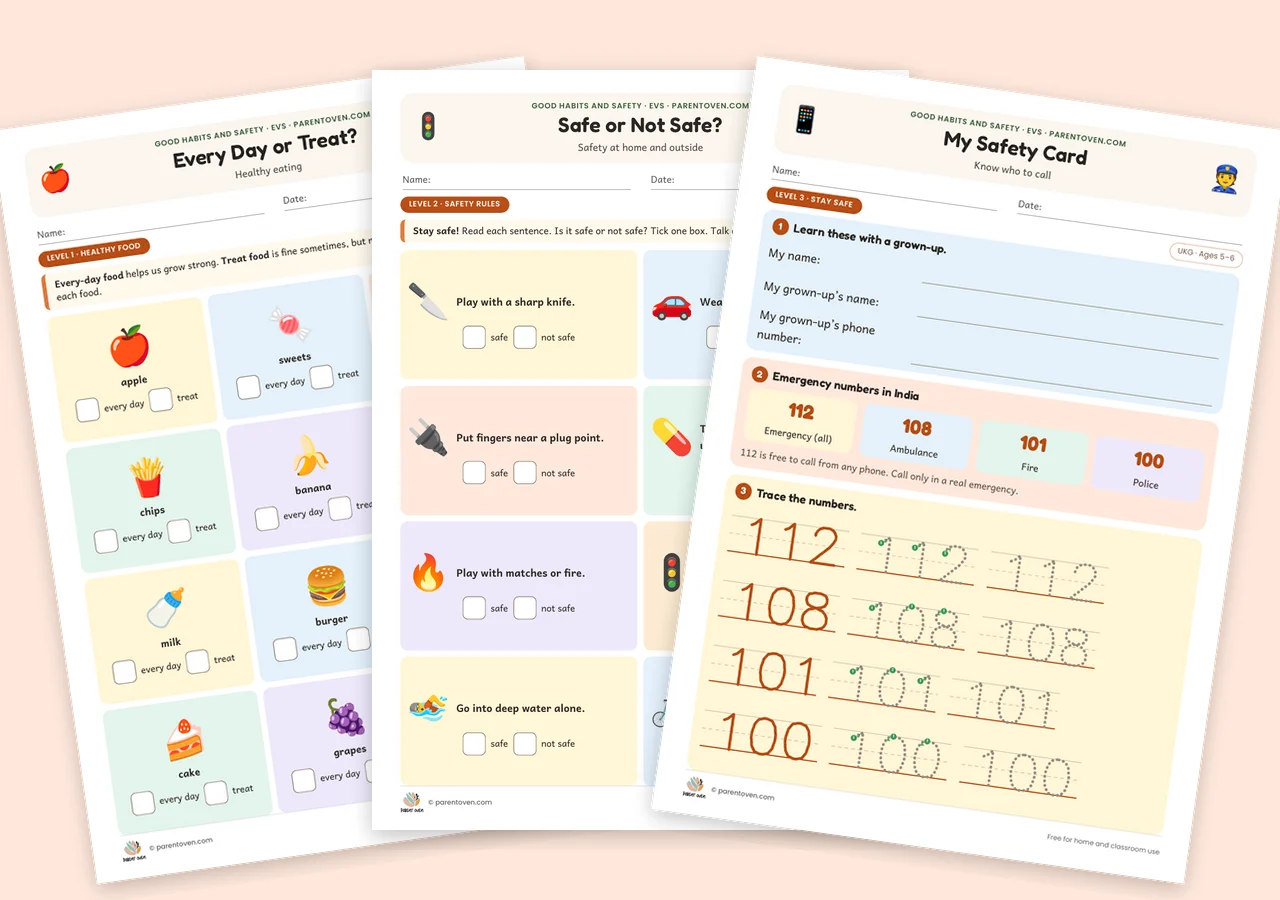
Good habits and safety
Clean hands and teeth, healthy food, sleep, and staying safe at home and outside.
Hindi worksheets for UKG
Most schools spend UKG on स्वर and व्यंजन, then move to short words without matras such as जल, घर and कमल. Matras usually start once those feel easy. Our Hindi sheets use natural school Hindi, standard copybook lines and the NCERT letter order.
Hindi · new set
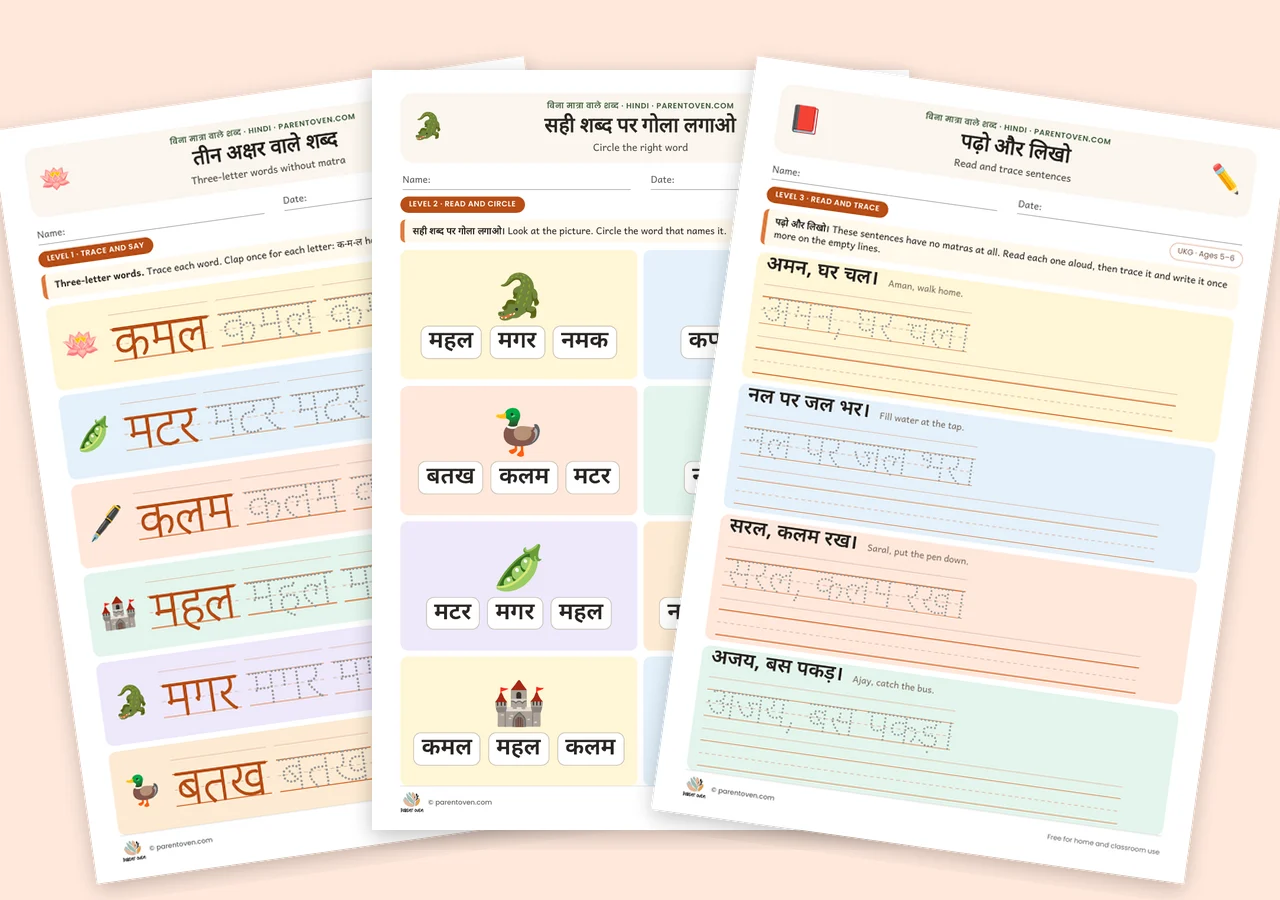
बिना मात्रा वाले शब्द (Hindi words without matra)
Two- and three-letter Hindi words like जल, घर and कमल to read, match and write on copybook lines.
Hindi · writing
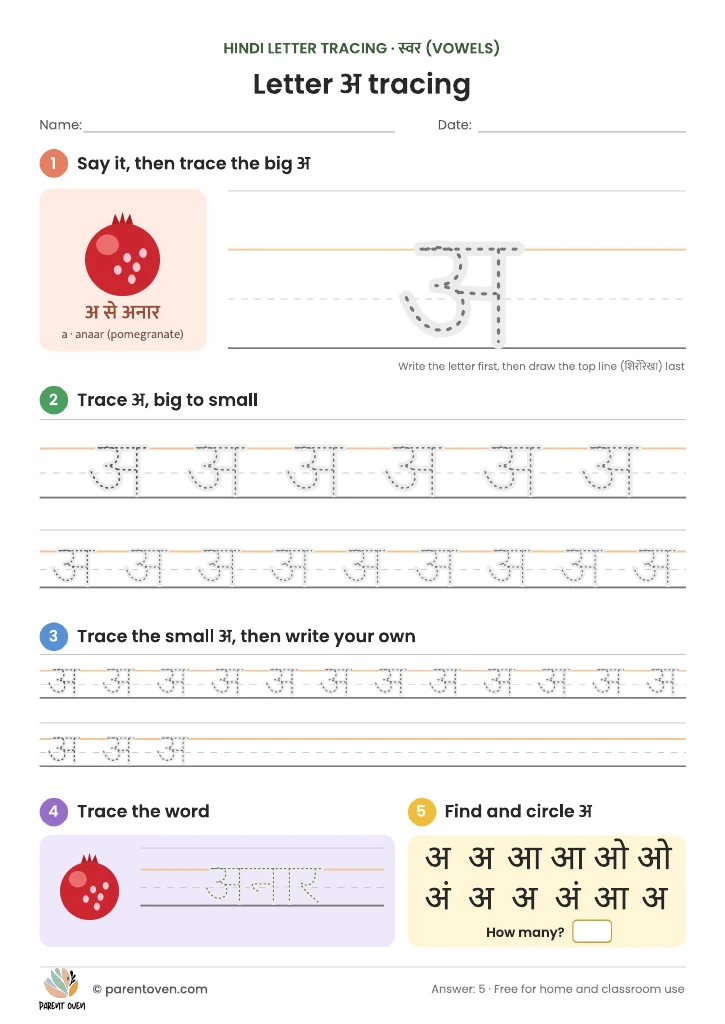
Hindi letter tracing (स्वर और व्यंजन)
Every स्वर and व्यंजन on standard copybook lines with a clean शिरोरेखा and start dots.
Hindi · end of UKG
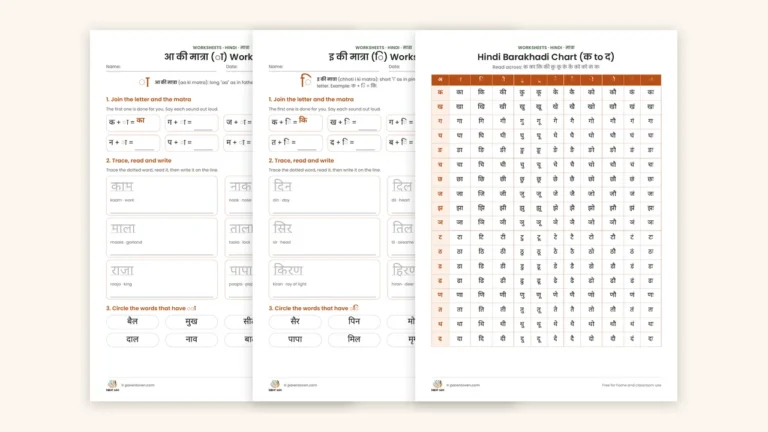
Hindi matra worksheets (आ to अः)
Once letters are secure, many schools start the first matras in the second half of UKG.
Online practice games
Short, screen-friendly practice for car rides and waiting rooms. Each game runs in the browser with no sign-up and no ads inside the game. Five minutes is enough; then print the matching worksheet.
Interactive · maths
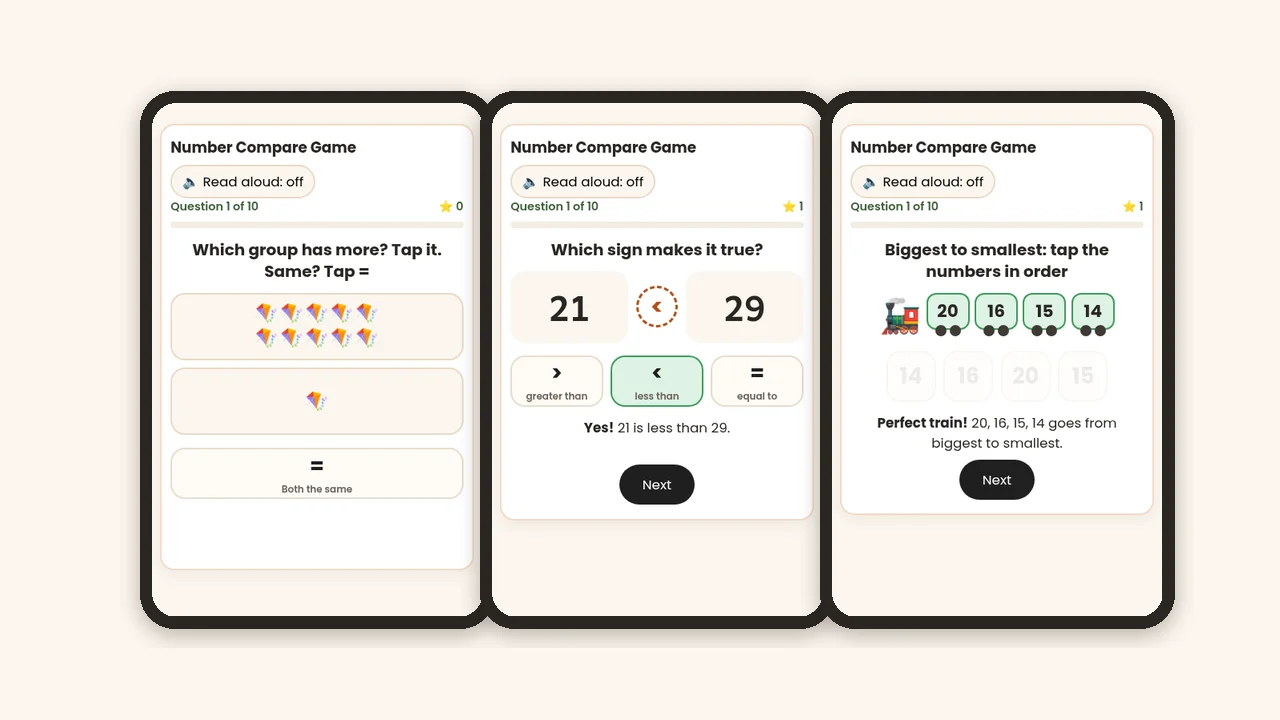
Compare numbers game
Which group has more, pick >, < or =, and the number train. Three levels, read-aloud.
Interactive · phonics
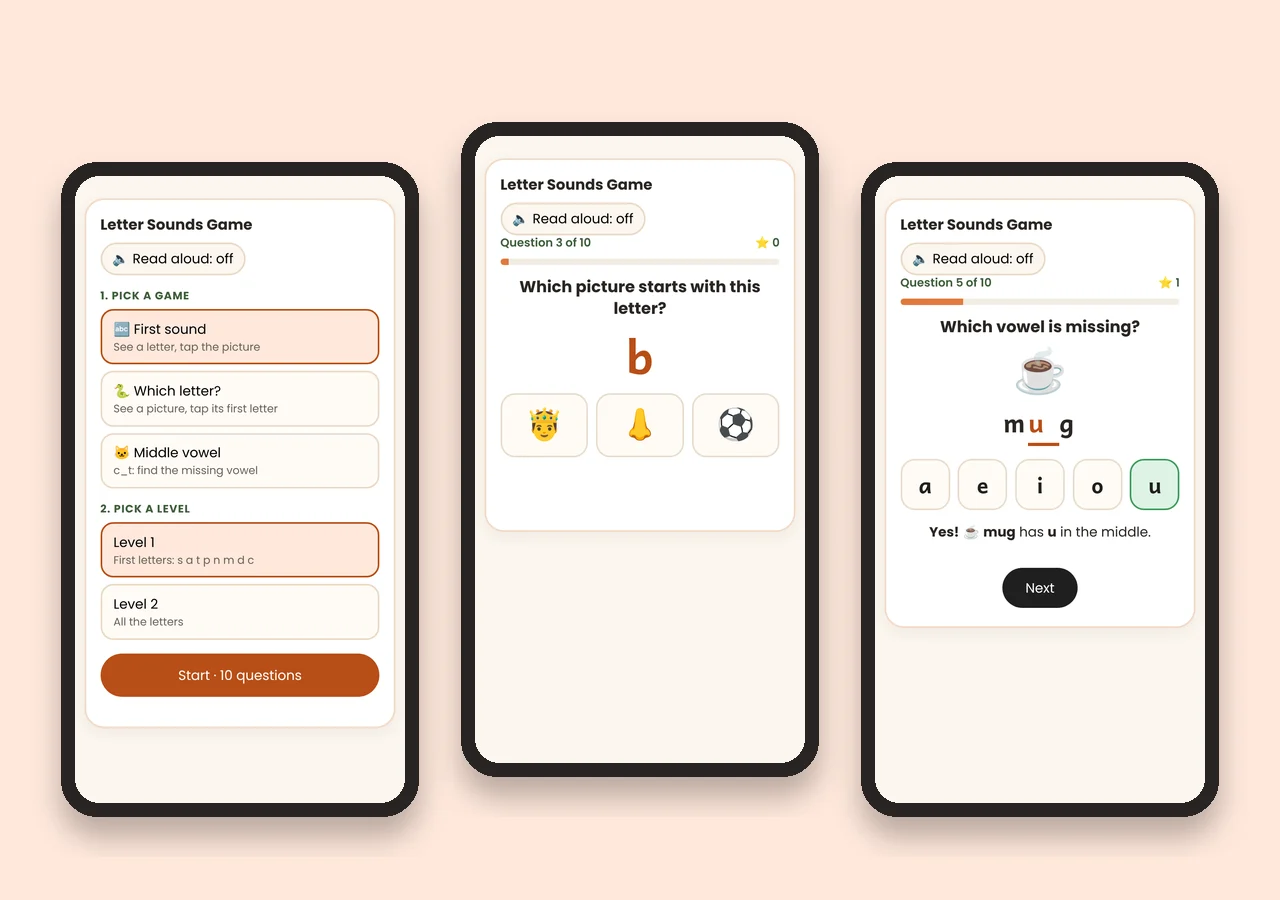
Letter sounds game
First sounds, first letters and the missing middle vowel. Two levels, read-aloud.
Interactive · maths
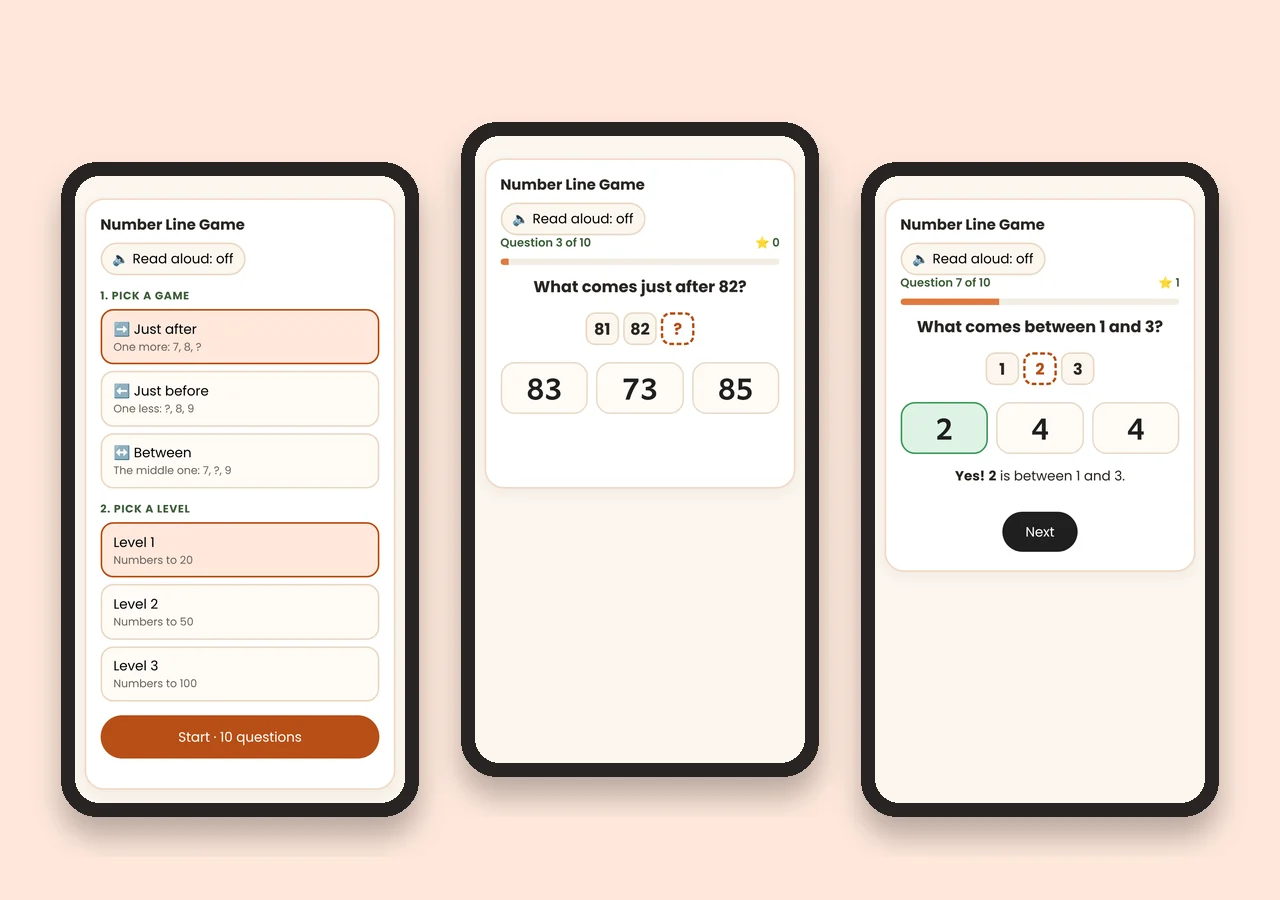
Before, after, between game
Find the missing number on a number line, up to 20, 50 or 100.
Interactive · writing
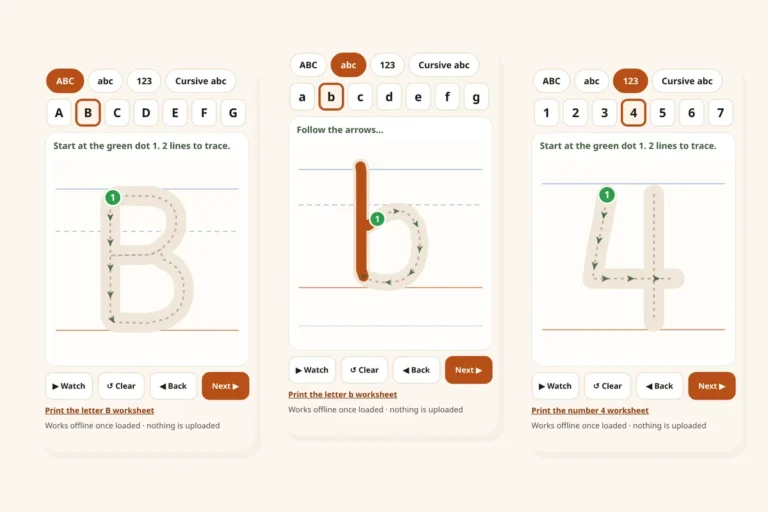
Letter tracing online
Trace letters with a finger on a phone or tablet, with a Hindi tab too.
Interactive · GK
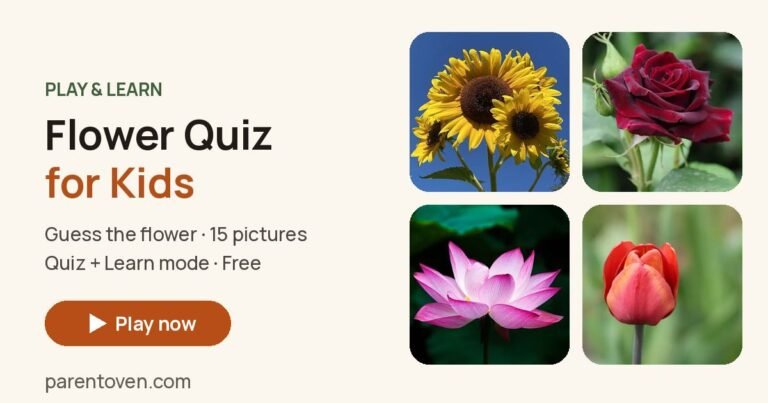
Play & Learn picture quizzes
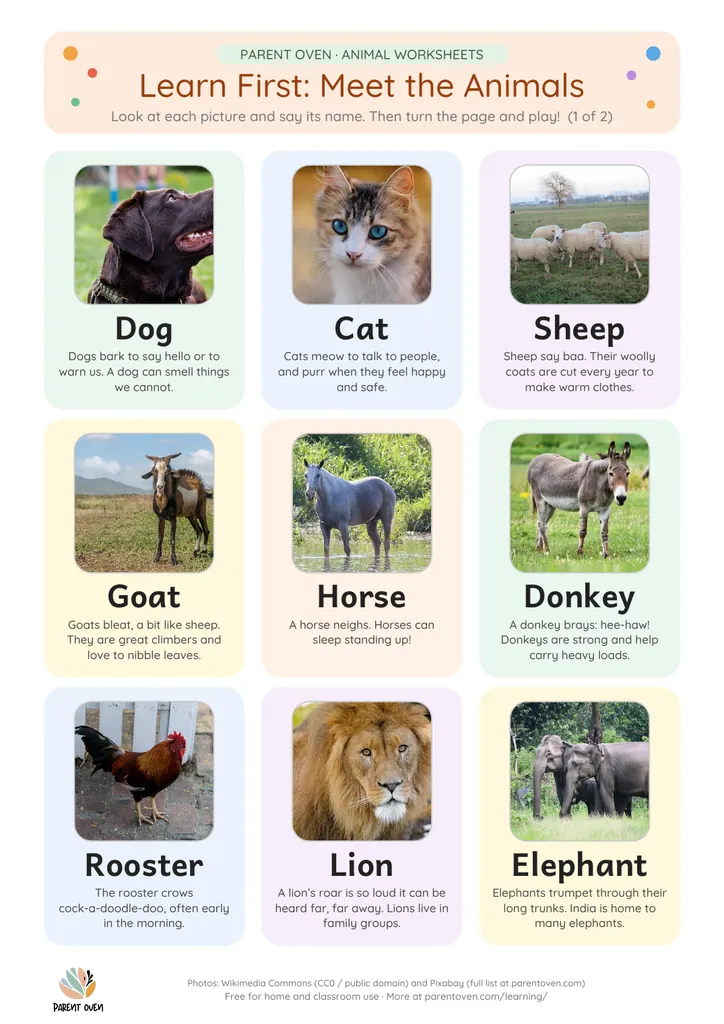
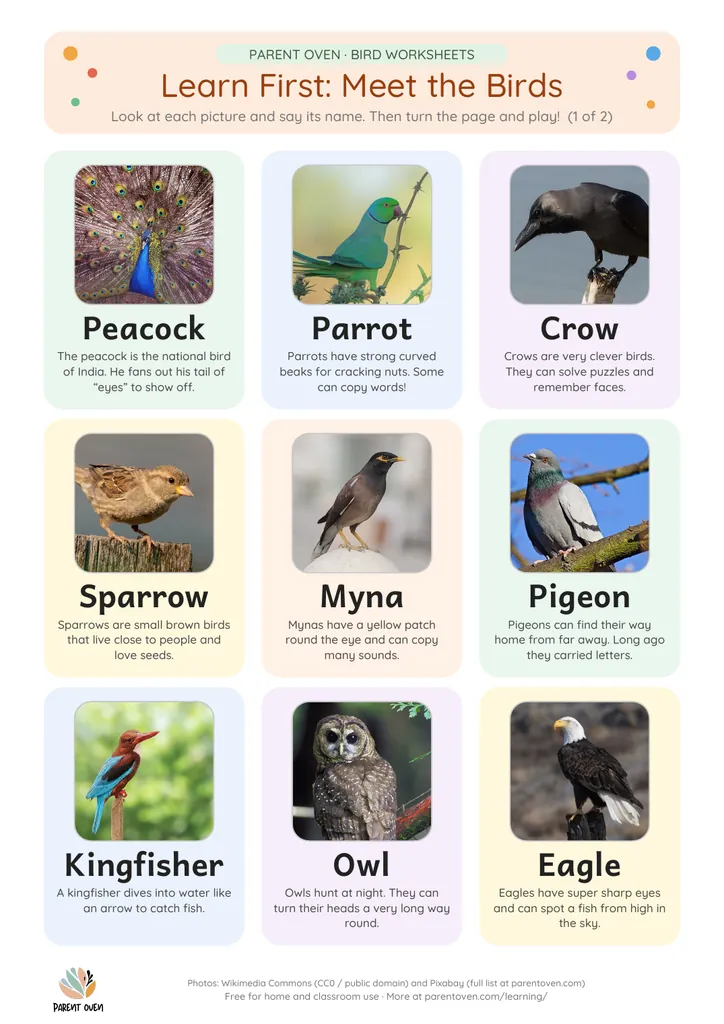
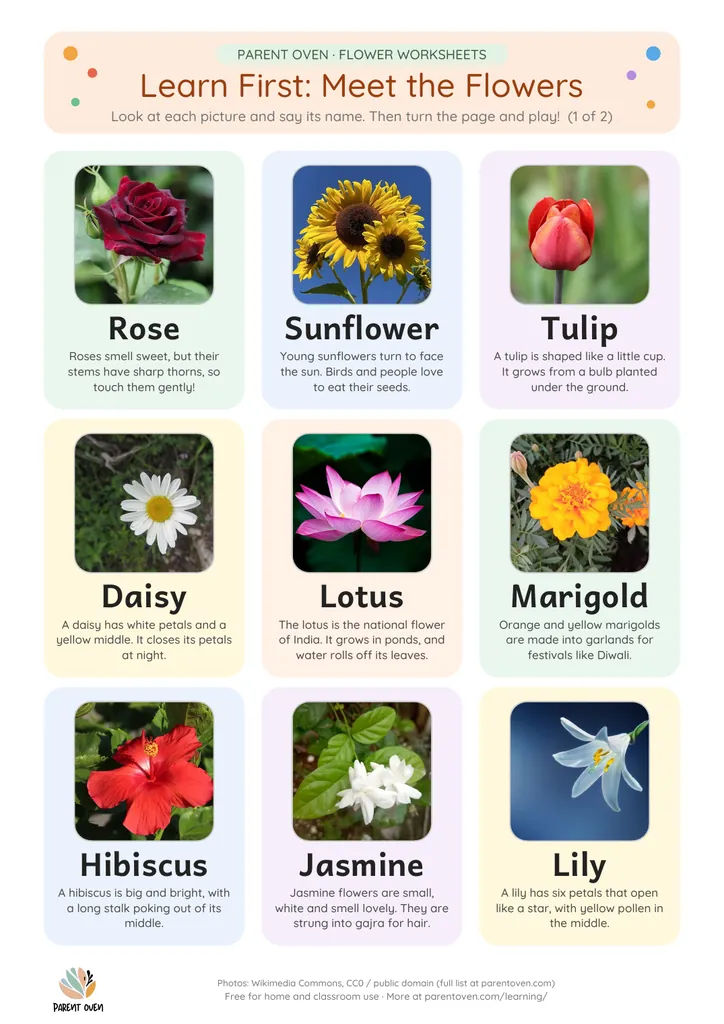
Animal, bird, flower, insect and shapes quizzes with a fun fact after each answer.
Drawing, colouring and fine motor
Strong hands make writing easier. Colouring inside lines, mazes and tracing patterns all build the small muscles a child needs for neat letters.
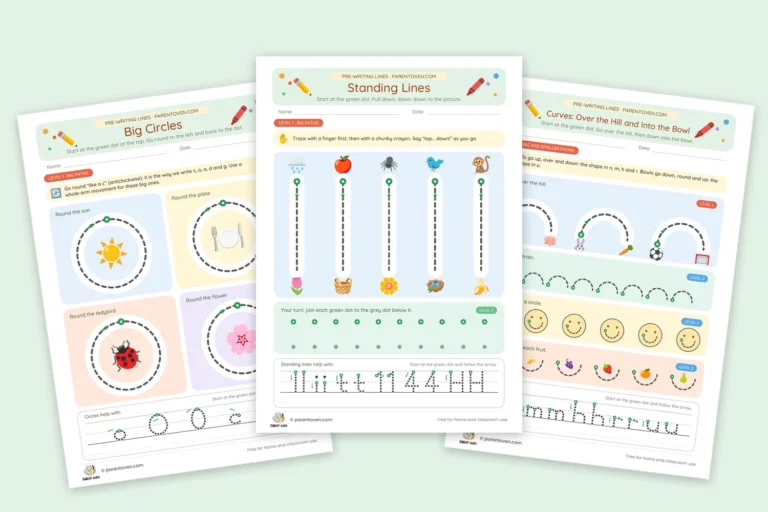
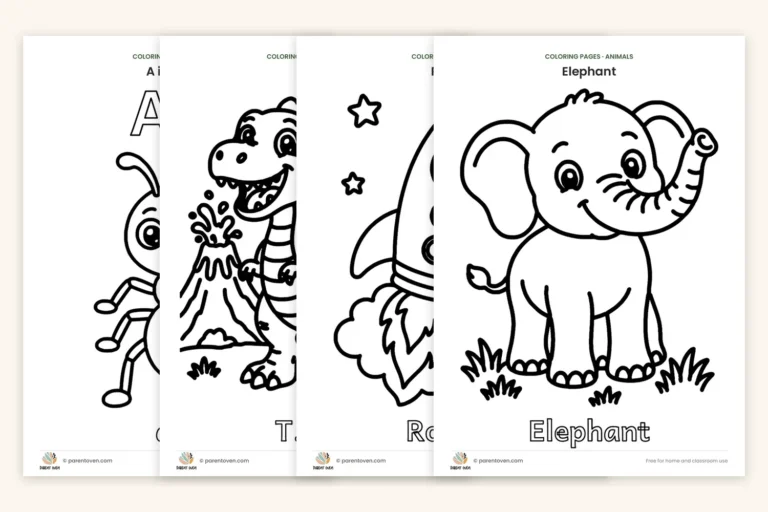
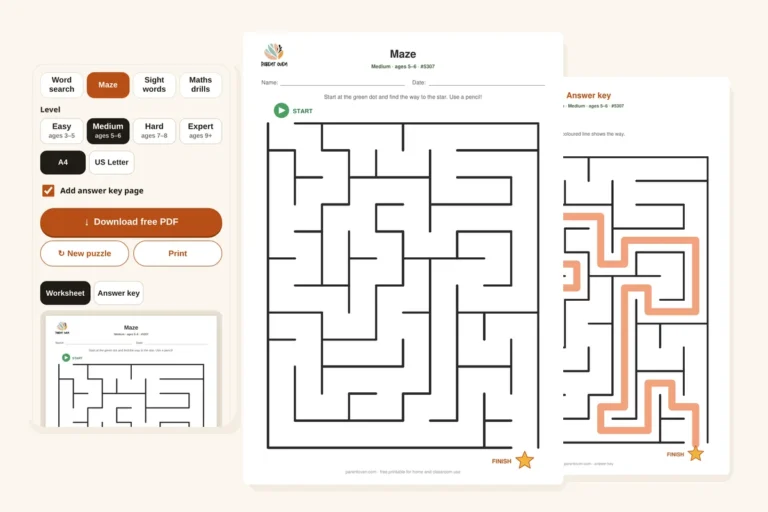
A simple UKG week
One short page a day, mixed across subjects, with a real-life activity to go with it. Skip a day whenever you need to.
| Day | Worksheet (10–15 min) | Try this too |
|---|---|---|
| Monday | One vowels or letter-sounds sheet | Find three things at home that start with the same sound. |
| Tuesday | Counting to 50 or compare numbers | Share grapes into two bowls: which has more? |
| Wednesday | One two- or three-letter words sheet | Spot the word in a picture book. |
| Thursday | Number names or measurement | Which is heavier, the bag of rice or the box of tea? |
| Friday | One EVS sheet (my body, transport, helpers) | Talk about the helpers and vehicles you saw this week. |
| Saturday | A Hindi words sheet or a maze | Play the letter sounds game for five minutes. |
How to get the most from UKG worksheets
- Keep it short. Ten minutes of focused work beats half an hour of tears. Stop on a good note.
- Real things first. Count spoons before counting pictures, and compare two piles of blocks before writing >.
- Say it out loud. “Seven is greater than four.” Talking through a sheet builds language and maths together.
- Praise the effort. Say “you checked every group carefully”, not “you are so clever”.
- Watch the pencil grip. A tripod grip (thumb and two fingers) makes writing less tiring. Short crayons help.
- Use the answer keys to check quickly, then let your child correct one mistake themselves.
- Print in black and white when you are doing a lot of pages; the ink-saving PDFs have the same content.
- Getting ready for Class 1? Our school readiness checklist covers the skills that matter beyond worksheets.
Frequently asked questions
What is UKG, and what age is it for?
UKG (Upper Kindergarten) is the last preschool year before Class 1. Schools also call it KG2, Senior KG or Sr. KG, and in the NEP 2020 structure it lines up with Balvatika 3. Most children are 5 at the start of the year and turn 6 during it. Because the Ministry of Education has asked states to set 6 as the minimum age for Class 1, check your child’s year with our school admission age calculator.
Is there an official CBSE syllabus for UKG?
No. The CBSE syllabus starts at Class 1. Preschools, including CBSE schools, follow NCERT’s National Curriculum Framework for the Foundational Stage (NCF-FS 2022) and plan their own year, so the topics differ a little from school to school. The skills on this page cover what most Indian schools teach in UKG.
How many worksheets should a UKG child do in a day?
One or two pages, about 10 to 15 minutes in all, is plenty. Stop while your child is still enjoying it. Talking, stories, drawing, counting real things and outdoor play matter just as much at this age.
Should my child be reading by the end of UKG?
Not fluently. The national goal for this age is to know letters and their sounds and to read simple two- and three-letter words. Many children also read CVC words like cat and sun and a few sight words by the end of UKG. Reading whole sentences with ease usually comes in Class 1 and 2.
Up to what number should a UKG child count?
The NIPUN Bharat goal is to count objects and read numbers up to about 10 with real understanding. Many private schools go further, to 50 or 100, along with number names and simple sums within 10. Counting real objects correctly matters more than reciting a long string of numbers.
My child writes b and d (or 3 and E) backwards. Should I worry?
No. Reversals are very common at 5 and 6 and usually fade by about 7 as reading improves. Practise the letters with a clear start dot and arrow, like our tracing sheets, and say the stroke out loud: “b: down, back up, round”.
What is the difference between LKG and UKG worksheets?
LKG (ages 4 to 5) is about recognising letters and numbers, pencil control and sorting. UKG builds on that: writing letters without tracing, letter sounds and first words, numbers beyond 10, comparing numbers and first sums. If a UKG sheet feels hard, step back to an easier level first; ages are only a guide.
Are there black and white versions to save ink?
Yes. Every new UKG worksheet set on this page has an ink-saving black and white PDF next to the colour one, with the same sheets and answer key.
Can teachers print these worksheets for a class?
Yes. Every printable is free for home and classroom use. Please share the link to the page rather than uploading the PDFs elsewhere.
Sources: NCERT, National Curriculum Framework for the Foundational Stage 2022; Ministry of Education, NIPUN Bharat learning targets (Lakshya) for Balvatika; NCERT, Jaadui Pitara play-based learning material. Last reviewed: 21 November 2026 by the Parent Oven team.